India-France Tech Deals Reshaping Global Power
India-France Tech Deals Reshaping Global Power
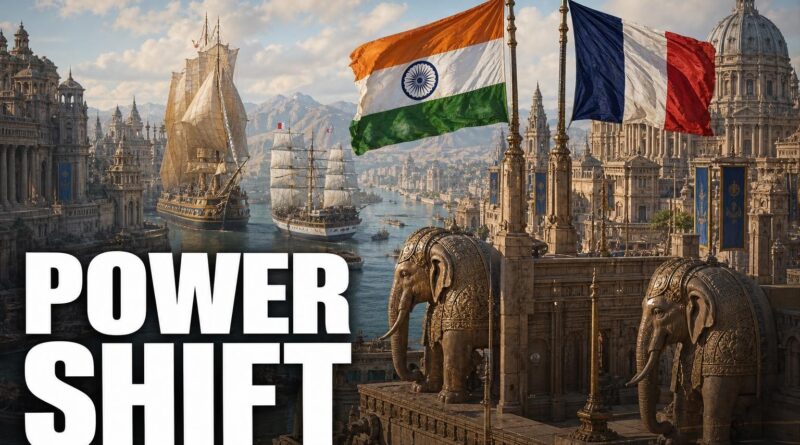
Most diplomatic meetings produce a communiqué nobody reads. The India-France bilateral in Nice on 14 June 2026 produced something rarer: 13 specific, named commitments — covering artificial intelligence, semiconductors, digital payments, critical minerals, startups, education, and cybersecurity. No vague language. No photo-opportunity pledges. Thirteen concrete outcomes from a single sitting between Prime Minister Narendra Modi and President Emmanuel Macron.
France is a founding G7 member and a permanent seat on the UN Security Council. India is the world’s most populous country and one of the fastest-scaling technology economies on the planet. When those two governments agree on 13 structured commitments in one afternoon, it’s worth reading the fine print — because the fine print is where the next decade of tech alliances gets written.
The Innovation Roadmap 2030: More Than a Buzzword
The centrepiece of the Nice meeting was the Innovation Roadmap 2030 — a bilateral framework for cooperation in critical and emerging technologies, artificial intelligence, startups, and innovation ecosystems.
Frameworks get announced all the time. Most collect dust. What makes this one structurally different is the Joint India-France AI Working Group, which both sides agreed to create specifically for cooperation on AI and its global governance. That last phrase — global governance — is the one to watch.
Right now, who writes the rules for artificial intelligence is one of the most contested geopolitical questions on the planet. The United States, the European Union, and China each have competing visions for how AI should be regulated, deployed, and governed internationally. By creating a dedicated working group focused not just on building AI but on governing it globally, India and France are inserting themselves into that conversation as a joint voice — not as followers of someone else’s framework.
For a country like India, which has historically been a rule-taker in international technology standards, that’s a meaningful shift.
The Supply Chain Story Nobody Is Telling
Alongside the Innovation Roadmap, the two countries launched a Dialogue on Economic Security — and this is where the geopolitical texture gets genuinely interesting.
The Dialogue covers supply chain resilience across five specific domains: critical minerals, semiconductors, critical technologies, energy, and cybersecurity. Read that list carefully. It’s not a random collection. It’s a precise map of every chokepoint that disrupted global supply chains over the past several years — the exact vulnerabilities that exposed how dependent advanced economies had become on single-source suppliers.
France, as a G7 member with deep industrial capacity and nuclear energy expertise, brings one set of assets. India, with its growing semiconductor ambitions, expanding role in critical mineral supply chains, and a rapidly scaling tech workforce, brings another. The Dialogue on Economic Security is, in effect, a mutual insurance policy — two large democracies agreeing to reduce each other’s exposure to supply chain shocks. The five domains aren’t chosen arbitrarily; they represent the infrastructure that every advanced economy will spend the next two decades trying to secure.
30,000 Students and the Long Game
One outcome from the Nice meeting that tends to get lost between the AI headlines and the semiconductor agreements: France has set a target of hosting 30,000 Indian students by 2030.
Numbers like this rarely feel important until you zoom out. Education partnerships between countries have historically been one of the most durable forms of soft power. The students who study in France, build networks there, and return to India carrying French institutional relationships are the same people who will be negotiating the next round of bilateral agreements in fifteen years.
France isn’t just recruiting students. It’s investing in a generation of Indian professionals who will think of France as a natural partner — in business, in research, in policy. For countries trying to build influence in the Indo-Pacific without the bluntness of military posturing, this is the playbook. The 30,000 target is less an education statistic and more a long-horizon geopolitical bet.
Final Thought
The India-France Innovation Roadmap 2030, signed in Nice on 14 June 2026, isn’t just a bilateral tech deal. It’s a preview of how major democracies are repositioning themselves for a world where AI governance, semiconductor supply chains, and education pipelines are the new instruments of geopolitical leverage. France is betting that locking in a structured partnership with India now — across 13 specific commitments — gives it a seat at the table when the next generation of global technology standards gets written. Whether India leverages that seat to become a rule-maker rather than a rule-taker is the question that will define whether the Innovation Roadmap 2030 becomes a footnote or a turning point.
Frequently Asked Questions
What is the India-France Innovation Roadmap 2030?
The Innovation Roadmap 2030 is a bilateral framework agreed upon during the June 2026 Nice summit between India and France, covering cooperation in AI, semiconductors, digital payments, critical minerals, startups, and cybersecurity through 13 concrete commitments.
What did India and France agree on at the Nice summit in 2026?
At the June 14, 2026 bilateral meeting in Nice, Prime Minister Modi and President Macron agreed on 13 specific commitments spanning artificial intelligence, semiconductors, digital payments, critical minerals, startups, education, and cybersecurity.
What is the Joint India-France AI Working Group?
The Joint India-France AI Working Group is a dedicated body created by both nations to cooperate on artificial intelligence development and its global governance, positioning India and France as a joint voice in shaping international AI regulation.
Recommended Reading
Explore these hand-picked resources to dive deeper into this topic:
- The Rise and Fall of American Growth by Robert J. Gordon
- Geopolitics: A Very Short Introduction by Klaus Dodds
- TED-Ed Learning Collection (Documentary Video Series)
As an Amazon Associate, we earn from qualifying purchases. This helps support Fact Storm Hub at no extra cost to you.
Sources
- https://www.gktoday.in/india-france-adopt-innovation-roadmap-2030/
🤖 AI Content Disclosure
This article was created using AI-assisted research and writing tools, then reviewed for quality and accuracy. Facts are sourced from publicly available web research, but readers should verify critical information from primary sources.
Published for educational and entertainment purposes. Last reviewed: June 2026