
Tata Motors: India’s Electric Vehicle Dominance Story
Tata Motors: India’s Electric Vehicle Dominance Story
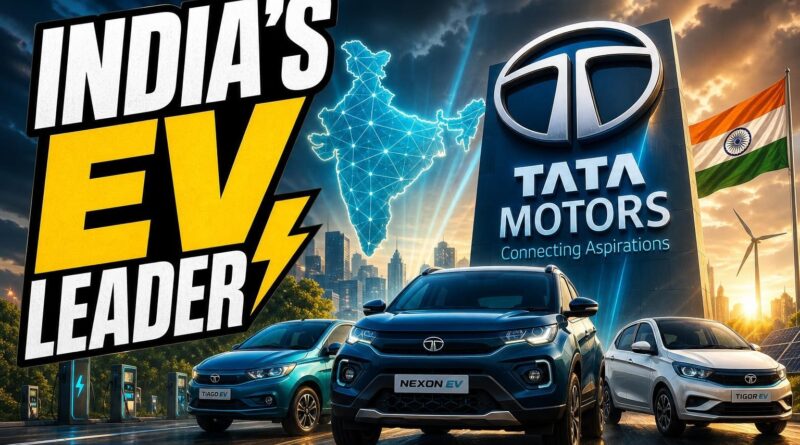
Walk past a charging station in Pune, Hyderabad, or Bengaluru right now, and there’s a good chance the car plugged in carries a Tata badge. Not a Tesla. Not a Hyundai. A Tata. The same company that built the trucks hauling cement and steel across India’s highways has quietly become the country’s undisputed leader in electric vehicle sales — while sitting third in overall passenger vehicle rankings.
That gap between third place and first-in-EVs is the most interesting story in Indian automotive right now. Here’s how it happened.
The Double Identity Nobody Talks About
Tata Motors has always been two companies in one body. On one side: India’s leading manufacturer of commercial vehicles — the trucks, buses, and fleet vehicles that physically move the country’s economy. On the other: a passenger vehicle brand that, for years, struggled to find its footing against Maruti Suzuki and Hyundai.
That second identity has been quietly rebuilt. As of June 2026, Tata offers 16 car models in India — 10 SUVs, 4 hatchbacks, and 2 sedans. The price range stretches from the Tiago at Rs. 4.70 Lakh to the Harrier EV at Rs. 21.49 Lakh. That’s a portfolio wide enough to catch a first-time buyer in a Tier-3 city and a family upgrading in Mumbai in the same sales quarter.
Tata still sits third in overall passenger vehicle sales in India. But the breadth of that lineup — and the deliberate push into segments rivals weren’t prioritizing — set the foundation for the move that actually defines the company right now.
How India’s EV Market Got a Surprise Leader
Here is the fact that reframes everything else: Tata Motors is currently the leading brand in EV sales in India. Not a challenger. Not neck-and-neck with a foreign brand. The leader.
The strategy behind that position was almost counterintuitive. Most legacy automakers globally have treated EVs as a premium signal — something you launch at the top of your lineup to show you’re serious about the future. Tata went the opposite direction. The Nexon EV, the Tiago EV, the Punch EV — these were priced and positioned for the segments Indian middle-class families actually shop in. When a buyer in Nagpur is comparing a petrol hatchback against an EV version of the same car, backed by a service network they already know, the conversation changes entirely.
That’s the mechanism. Tata didn’t win India’s EV market by out-teching competitors. They won it by making electric vehicles a realistic option for buyers who were never going to pay a premium-brand price tag. Volume followed trust, and trust followed availability.
Six Cars Coming — And Four of Them Are Electric
Cold fact: Tata Motors has six confirmed upcoming models for the Indian market. The Sierra EV. A new Tigor. A new Tigor EV. The Safari EV. The Altroz EV. And the Avinya.
Count the EVs: four out of six. That’s not a company hedging its bets on which fuel type wins. That’s a company that has already decided.
The Avinya is the one to watch most closely. Unlike the Nexon EV or Punch EV — both adapted from existing petrol platforms — the Avinya is being built from the ground up as an electric vehicle. If Tata lands it at a price point that Indian buyers find compelling, it fills the one visible gap in the current lineup: a genuinely premium, native EV that doesn’t feel like a conversion.
The Sierra revival carries its own signal. The original Sierra was a cult vehicle — boxy, distinctive, remembered fondly by a generation of Indian drivers. Bringing that nameplate back as an EV is a deliberate message: the brand you grew up with is still here, just running on a different kind of fuel. Nostalgia is a powerful sales tool when you pair it with the right product.
The Infrastructure Bet Running Quietly in the Background
Two investments Tata has made that rarely surface in sales coverage, but matter to where this goes next.
First, Tata Motors operates 11 registered vehicle scrapping facilities across 10 states in India — with the southern region still uncovered. As India’s vehicle fleet ages and government scrapping policy tightens, the economics of end-of-life vehicles become significant. Tata building this infrastructure now positions the company inside a policy conversation that will only grow louder over the next decade. It’s not glamorous. It’s exactly the kind of long-horizon move that separates companies building for 2035 from companies managing this quarter.
Second, Tata vehicles have scored strongly in GNCAP crash tests — independent safety assessments that Indian buyers are increasingly paying attention to. In a market where safety ratings were historically an afterthought behind price and feature lists, consistent GNCAP performance builds a layer of trust that no advertising budget can replicate. For a brand trying to move buyers upmarket over time, that trust compounds.
Third Place, First in EVs — And Why That’s the Interesting Story
Tata Motors is third in India’s passenger vehicle market. That’s the honest number, and it’s worth sitting with rather than papering over.
But third in overall PV sales while holding first in EV sales is a genuinely unusual position — and it tells you something about where the growth is coming from. Tata isn’t winning the volume game across every segment. They’re winning the segment that is growing fastest and that most legacy competitors were slow to take seriously.
The question the next few years will answer is whether EV leadership translates into overall PV ranking movement. With four EVs in the confirmed pipeline, the Avinya targeting the premium end, and a pricing strategy that has already proven it can convert middle-class buyers, Tata has built the pieces. Whether third becomes second — or stays third with a much larger slice of the market’s most valuable segment — is the story still being written.
Either way, the company that built India’s trucks is now setting the pace for India’s electric future. That’s not a small thing.
Frequently Asked Questions
Is Tata Motors the number one EV brand in India?
Yes, Tata Motors is currently the leading brand in EV sales in India — not just a challenger, but the outright leader, ahead of both foreign and domestic competitors.
How many car models does Tata Motors offer in India?
As of June 2026, Tata Motors offers 16 car models in India, including 10 SUVs, 4 hatchbacks, and 2 sedans, with prices ranging from Rs. 4.70 Lakh to Rs. 21.49 Lakh.
What rank is Tata Motors in overall passenger vehicle sales in India?
Tata Motors ranks third in overall passenger vehicle sales in India, behind Maruti Suzuki and Hyundai, despite being the undisputed leader in the country’s electric vehicle market.
Recommended Reading
Explore these hand-picked resources to dive deeper into this topic:
- The Innovators: How a Group of Hackers, Geniuses, and Geeks Created the Digital Revolution by Walter Isaacson
- India’s Struggle for Independence by Ramachandra Guha
- Tesla Model 3 Documentary Series (electric vehicle exploration)
As an Amazon Associate, we earn from qualifying purchases. This helps support Fact Storm Hub at no extra cost to you.
Sources
- https://cars.tatamotors.com/
- https://www.tatamotors.com/
- https://www.carwale.com/tata-cars/
- https://en.wikipedia.org/wiki/Tata_Motors
- https://www.tata.com/home-page
🤖 AI Content Disclosure
This article was created using AI-assisted research and writing tools, then reviewed for quality and accuracy. Facts are sourced from publicly available web research, but readers should verify critical information from primary sources.
Published for educational and entertainment purposes. Last reviewed: June 2026