
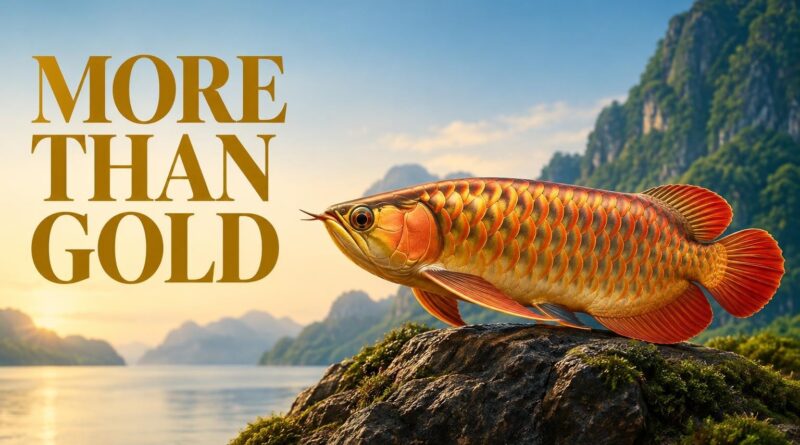
India’s Most Expensive Fish: Worth More Than Gold
India’s Most Expensive Fish: Worth More Than Gold
A fish so rare it was once reserved for royalty is now nearly impossible to find in the very river that made it famous. It has a three-month window to exist. It answers to different names depending on which river it enters. And in the Godavari delta, it carries a cultural weight so heavy that families wake before dawn to queue at riverside markets, hoping to secure even a single piece before the day’s catch sells out. This is the Pulasa — and if you’ve never heard of it, you’re about to understand why people who have never forget it.
A Fish With a Secret Identity
Most people outside Andhra Pradesh have never heard the name “Pulasa.” But they’ve almost certainly heard of its cousin.
In West Bengal and Bangladesh, this same fish is called Ilish — or Hilsa. It is celebrated across Bangladesh with a devotion that borders on cultural identity: painted on walls, woven into poetry, cooked at weddings, and mourned when the season ends. Across South Asia, it is widely regarded as one of the finest fish on the planet, a prized catch that inspires genuine reverence wherever it appears.
Scientifically, it is Tenualosa ilisha, a saltwater herring from the Clupeidae family, native to the North Indian Ocean. It spends most of its life in the sea — but once a year, something extraordinary happens. It leaves the Bay of Bengal and swims upstream into rivers, fighting the current to reach its spawning grounds.
In the Godavari delta, that journey turns this fish into something else entirely. Something with a different name, a different flavor, and a story that has outlasted kingdoms. The transformation isn’t just cultural — it’s physical. The river changes the fish. And the fish, in turn, has shaped the culture of an entire region.
The Three-Month Window That Changes Everything
The name “Pulasa” doesn’t belong to a species — it belongs to a moment. Between July and September, when monsoon floods raise the Godavari River, Tenualosa ilisha swims upstream from the Bay of Bengal into the Godavari’s distributaries. As the fish feed on the rich silt and nutrients carried by the floodwaters during that upstream journey, their fat content transforms — flesh becomes softer, richer, and more intensely flavored than at any other point in the year.
Caught outside this window, or in any other river, it simply doesn’t earn the name. The Godavari’s flood season is the ingredient no kitchen can source separately. When the rains end and the waters recede, so does the Pulasa — until next July. Three months. One river. One chance. There is no workaround, no off-season substitute, and no amount of culinary technique that can replicate what the monsoon does to this fish in those specific waters. That hard biological limit is the entire point.
Once Reserved for Royalty
The Pulasa’s reputation didn’t begin with viral market reports. It goes back centuries.
In the cultural history of the Godavari region, Pulasa was considered a taste reserved for royalty. Common people rarely had access to it — not just because of cost, but because the fish was genuinely scarce and the season brutally short. Rulers and wealthy zamindars would have it rushed from the river to their kitchens while still fresh, because Pulasa deteriorates quickly and loses much of its character if not eaten soon after the catch.
That royal association never fully disappeared. It simply transformed. Today, the families chasing the Pulasa through monsoon markets are urban households, NRIs visiting during the season, and restaurants that advertise a fresh catch as a limited event. The cultural weight of the fish — the sense that eating it is a privilege, a ritual, something you wait all year for — has survived every generation intact. When a food carries that kind of story, it stops being just a meal. It becomes an occasion.
Why the Pulasa Is Becoming Harder to Find
The scarcity driving today’s demand is not a rumor — Godavari’s iconic Pulasa currently faces confirmed scarcity, and the reasons are layered. The seasonal window was always narrow: three months, one river, one annual migration. But overfishing during that brief period, shifting river conditions in the Godavari delta, and inconsistent monsoon patterns have all placed additional pressure on an already fragile supply. When the annual catch shrinks inside a window that was never large to begin with, the fish that does reach the market becomes something closer to an event than a commodity.
For fishermen who depend on this season, a strong catch can anchor an entire year’s income. For buyers, the willingness to pay a steep premium for something genuinely irreplaceable reflects something deeper than appetite — it reflects the understanding that no farm, no freezer, and no supply chain can manufacture a monsoon-fed Godavari catch. The Pulasa cannot be scaled. It cannot be stockpiled. And that biological stubbornness is precisely what makes it so difficult to let go of, even as it becomes harder to find.
Final Thought
The Pulasa’s story has never really been about price. It’s about what happens when nature sets a hard deadline and refuses to negotiate. Tenualosa ilisha swims up the Godavari for three months every year, floods or no floods, demand or no demand. The fish doesn’t scale to meet the market. It doesn’t respond to cultural obsession or culinary prestige. It simply arrives, transforms in the floodwater, and disappears.
But here is the question that the shrinking catches are beginning to force: what does a culture lose when the thing it waits for all year stops arriving? The Pulasa is not just a fish — it is a shared calendar, a reason families return home during monsoon, a flavor that anchors memory across generations. If the catches continue to decline, the season won’t simply become leaner. It will become a story people tell about something that used to happen — a ritual preserved only in the telling, with nothing left to taste. In a world where almost everything can be manufactured on demand, the Pulasa is a stubborn, silver reminder that some things still belong entirely to a river and a season. And like the river itself, they are not guaranteed to last.
Frequently Asked Questions
What is Pulasa fish and why is it so expensive?
Pulasa is the name given to Hilsa fish (Tenualosa ilisha) when it swims upstream into the Godavari river during monsoon season. Its rarity, short three-month availability window, and intense cultural significance in Andhra Pradesh make it extraordinarily expensive.
What is the difference between Pulasa and Hilsa fish?
Pulasa and Hilsa are the same species, Tenualosa ilisha, but called by different names depending on the river. In West Bengal and Bangladesh it is called Hilsa or Ilish, while in the Godavari delta it is known as Pulasa.
When is Pulasa fish available in the Godavari river?
Pulasa fish is only available between July and September, during the monsoon season, when it migrates from the Bay of Bengal upstream into the Godavari river to reach its spawning grounds, giving it an extremely limited seasonal window.
Recommended Reading
Explore these hand-picked resources to dive deeper into this topic:
- The Salmon of Doubt by Douglas Adams
- Braiding Sweetgrass by Robin Wall Kimmerer
- National Geographic Aquatic Life Documentary Series (premium streaming access)
As an Amazon Associate, we earn from qualifying purchases. This helps support Fact Storm Hub at no extra cost to you.
Sources
- https://theprint.in/india/godavaris-iconic-pulasa-fish-now-faces-scarcity/2696741/
- https://www.pulasa.com/
- https://en.wikipedia.org/wiki/Ilish
- https://www.licious.in/blog/recipe/everything-about-pulasa-fish?srsltid=AU7gw4Wvl71i-f7zTHQyZnCGAzmrnwT4lXGqWINFOSZgq9AW43vGwFrf
- https://www.britannica.com/animal/ilish
🤖 AI Content Disclosure
This article was created using AI-assisted research and writing tools, then reviewed for quality and accuracy. Facts are sourced from publicly available web research, but readers should verify critical information from primary sources.
Published for educational and entertainment purposes. Last reviewed: September 2026