
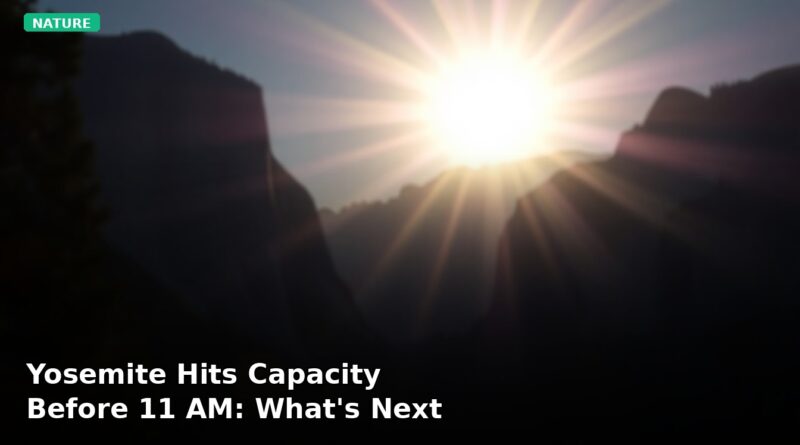
Yosemite Hits Capacity Before 11 AM: What’s Next
Yosemite Hits Capacity Before 11 AM: What’s Next
It was 10:59 a.m. on May 2, 2026, when Yosemite National Park sent out an alert that stopped people mid-drive: “All parking in Yosemite Valley is full. Avoid entering Yosemite Valley.” Not at noon. Not after a holiday weekend rush. Before 11 in the morning — weeks before summer officially began.
Rangers on the ground described the scene as “wall to wall” visitors. And according to those same rangers, this summer could be Yosemite’s busiest ever. So what’s actually happening inside one of America’s most beloved national parks — and why is it getting worse?
The Morning Everything Filled Up
May 2, 2026 wasn’t a holiday. It wasn’t peak summer. It was a regular Saturday in early May — and every single parking lot in Yosemite Valley was gone before most families had finished breakfast.
The park’s Nixle alert, timestamped 10:59 a.m., wasn’t a suggestion. It was a warning. Rangers were telling people to turn around before they even got to the gates, because there was simply nowhere left to go. Visitors who had driven hours — some from the Bay Area, some from farther — were left sitting in gridlock with no guarantee of ever reaching the valley floor.
That’s the part that catches people off guard. Yosemite Valley isn’t a sprawling urban park. It’s a narrow, glacier-carved corridor roughly seven miles long, flanked by 3,000-foot granite walls. There’s only so much road. Only so many pullouts. When it fills, it fills — and there’s no overflow valve.
The Rule Change Nobody Noticed
For a few years, Yosemite operated under a reservation system that required visitors to book a timed entry permit before arriving. It wasn’t perfect, but it worked — crowds were distributed, parking was manageable, and rangers could actually do their jobs without directing traffic all day.
Then the reservation system was quietly dropped.
Critics say that single policy shift is what’s driving the current chaos. Yosemite isn’t alone — other national parks have also been stepping back from reservation-based entry, and the results are playing out in real time. Without a booking requirement, the park operates on a first-come, first-served model. That sounds fair in theory. In practice, it means whoever gets there earliest wins, and everyone else sits in a line that stretches back toward the highway.
The irony is that the reservation system was introduced specifically because Yosemite had already experienced this kind of gridlock before. The park went through it. Learned from it. Built a solution. And then, quietly, walked it back.
What Makes Yosemite So Hard to Protect
Yosemite National Park draws millions of visitors every year, making it one of the most visited national parks in the United States. That number alone tells part of the story — but the geography tells the rest.
Most of those millions aren’t spread evenly across Yosemite’s nearly 750,000 acres of wilderness. They’re concentrated in one place: Yosemite Valley. El Capitan, Half Dome, Bridalveil Fall, the Merced River — everything iconic is right there, packed into that narrow corridor. Visitors don’t come to Yosemite to hike the backcountry. They come for the valley. And the valley simply wasn’t built for this volume.
The wildlife feels it too. Black bears, mule deer, peregrine falcons, and countless other species live in and around the valley. Increased foot traffic, noise, and food waste don’t just inconvenience animals — they change behavior. Bears that associate humans with food become problem bears. Nesting birds get disturbed. The ecological balance that makes Yosemite worth visiting in the first place is under quiet, sustained pressure every time the parking lots overflow.
Why This Summer Feels Different
Rangers aren’t usually alarmist. When park staff start using phrases like “wall to wall” in early May, that’s a signal worth paying attention to.
The combination of factors heading into summer 2026 is unusual. The reservation system is gone. Visitor numbers remain at historic highs. And the May 2 incident happened before school let out for summer — before the wave of family road trips, before the peak travel weeks that typically define July and August in the Sierra Nevada.
If the valley filled before 11 a.m. on a May Saturday, the math for a July Fourth weekend gets uncomfortable fast.
The broader question isn’t just about parking. It’s about what national parks are for. Yosemite was set aside in the 19th century to protect a landscape so extraordinary that Congress decided no private owner should ever control it. That original purpose — preservation alongside access — is being stress-tested right now, in real time, one full parking lot at a time.
Final Thought
The 10:59 a.m. alert on May 2, 2026 is a small data point with a large implication: Yosemite Valley is operating beyond its natural capacity, and the policy tool most likely to fix it — the timed entry reservation system — has already been tried, proven, and abandoned. The park isn’t being loved carelessly by bad visitors. It’s being loved carelessly by policy. Until reservation systems return, rangers will keep sending alerts, families will keep turning around at the gate, and the valley’s wildlife will keep absorbing the pressure of a crowd that has nowhere else to go. The wilderness isn’t infinite. Neither is the parking lot.
Frequently Asked Questions
Why did Yosemite reach full capacity before 11 AM in May 2026?
On May 2, 2026, every parking lot in Yosemite Valley was full by 10:59 a.m. on a regular Saturday. Rangers issued alerts warning visitors to turn around, with the narrow valley corridor simply having no room left for more cars.
Does Yosemite National Park still require a reservation or timed entry permit?
Yosemite previously used a timed entry reservation system that helped manage crowds effectively, but that system was quietly dropped. Critics believe removing this policy is a key reason overcrowding has significantly worsened.
How crowded will Yosemite be in summer 2026?
Rangers on the ground have described current conditions as ‘wall to wall’ visitors and warn that summer 2026 could be Yosemite’s busiest ever, with the park already hitting capacity weeks before the official start of summer.
Recommended Reading
Explore these hand-picked resources to dive deeper into this topic:
- The Last Wilderness by Terry Tempest Williams
- A Walk in the Woods by Bill Bryson
- National Geographic Binoculars (wildlife observation tool)
As an Amazon Associate, we earn from qualifying purchases. This helps support Fact Storm Hub at no extra cost to you.
Sources
- https://www.sfchronicle.com/outdoors/article/yosemite-valley-parking-full-22238123.php
- https://www.yahoo.com/news/articles/yosemite-parking-filled-lunch-summer-195622829.html
- https://www.the-sun.com/travel/16318732/yosemite-national-park-summer-crowds/
- https://www.threads.com/@sfchronicle/post/DX2yz2KjgWG/yosemite-national-park-warned-visitors-saturday-morning-that-all-parking-in
- https://www.yahoo.com/news/articles/yosemite-descends-chaos-subtle-rule-163658635.html
🤖 AI Content Disclosure
This article was created using AI-assisted research and writing tools, then reviewed for quality and accuracy. Facts are sourced from publicly available web research, but readers should verify critical information from primary sources.
Published for educational and entertainment purposes. Last reviewed: May 2026