
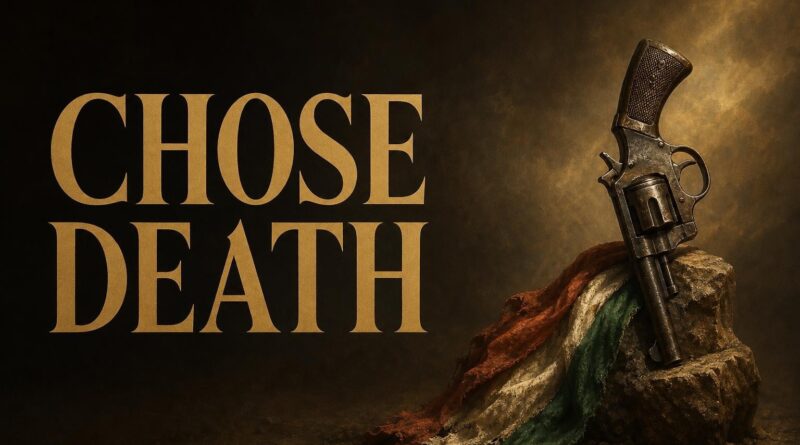
Chandrashekhar Azad: The Freedom Fighter Who Chose Death
Chandrashekhar Azad: The Freedom Fighter Who Chose Death
This week, Bhim Army chief Chandrashekhar Azad made headlines when he accused Delhi Police of turning Jantar Mantar “into Jallianwala Bagh.” It’s a comparison that carries enormous weight in India. But most people who heard that phrase couldn’t tell you exactly what happened at Jallianwala Bagh — or why a teenage boy named Chandra Shekhar Tiwari was so shattered by it that he renamed himself “Azad” and swore he would never be taken alive.
Today, July 23, 2026, is exactly 120 years since Chandrashekhar Azad was born. This is his story.
The Boy Who Refused to Have a Last Name
Chandra Shekhar Sitaram Tiwari was born on 23 July 1906. That full name — formal, family, ordinary — would not survive his twenties. He discarded it the way a soldier discards a uniform that no longer fits.
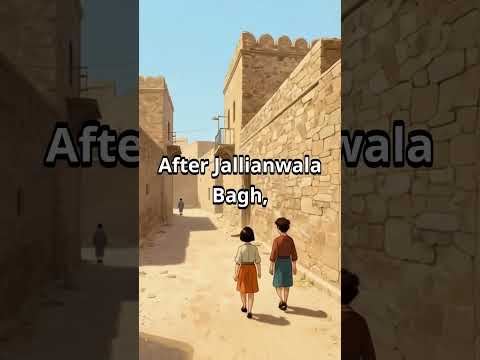
He grew up in a time when India was not a country you could speak freely about. The British Empire governed through law, yes, but also through fear. Dissent had consequences. Crowds could be dispersed. Protesters could be jailed. And in April 1919, when Azad was still a boy in his early teens, a crowd in Amritsar was not dispersed. It was shot.
What he heard about Jallianwala Bagh changed the direction of his life permanently. He chose a new name — Azad, meaning “free” — and wore it as both a declaration and a dare. The boy from a family with a perfectly ordinary surname decided that the only name worth carrying was one the Empire couldn’t own.
Over 1,600 Bullets. Ten Minutes. 379 Dead.
Colonel Reginald Dyer ordered 90 soldiers — 65 Gorkhas and 25 Punjabis from the Baloch regiment — to open fire on an unarmed crowd gathered in a walled garden in Amritsar. No warning. No exit offered. Just rifles aimed at people who had nowhere to run.
According to historical records, those soldiers fired over 1,600 bullets into the crowd in approximately ten minutes. The official British count recorded 379 killed and over 1,100 wounded. Indian estimates put the dead far higher.
Think about what over 1,600 bullets in ten minutes actually means. That is more than 160 rounds every sixty seconds. The soldiers did not stop to ask questions. They fired until Dyer decided they were done.
For a teenage Azad, already stirred by the political energy of Gandhi’s movement, Jallianwala Bagh was not an abstraction. It was a massacre of ordinary people — the kind of people he grew up around. And it answered a question he hadn’t fully formed yet: what does this empire actually think of us?
From Gandhi’s Movement to Something Harder
Azad joined Mahatma Gandhi’s non-cooperation movement, drawn in by the scale of it — millions of Indians refusing to cooperate with British rule. But the movement was called off following violence at Chauri Chaura, and for Azad, that decision was a turning point.
He did not abandon the goal. He abandoned the method.
Azad moved toward the Hindustan Republican Association — the HRA — a revolutionary organisation that believed armed resistance was the only language the Empire would understand. He didn’t just join it. He reorganised it, sharpened it, and became its most recognisable figure.
The name he had chosen for himself said everything: Azad — free. Not free as a hope. Free as a statement of fact, made in defiance of every chain the Empire tried to place on him. He carried that name not as a pseudonym but as a philosophy, one he intended to honour until his last breath.
The Vow He Kept Until the End
Azad made one promise to himself that he never broke: he would never be captured alive by the British. Not a slogan. Not a pose. A commitment he carried every day.
The British knew who he was. They wanted him badly. He evaded them for years, moving between safe houses, organising, planning, training younger revolutionaries — including Bhagat Singh, Sukhdev, and Rajguru, who would later become the most famous names of the independence movement.
All four of them — Azad, Bhagat Singh, Sukhdev, and Rajguru — share something that most Indians don’t know: the Indian government has been asked to formally look into why none of them have been granted official martyr status. The men who arguably gave the most — their lives, freely and deliberately — remain without that formal recognition.
Final Thought
Chandrashekhar Azad was born on 23 July 1906. He never lived to see independence. But the phrase Chandrashekhar Azad of the Bhim Army used this week — “Jallianwala Bagh” — is still the sharpest shorthand in the Indian political vocabulary for state violence against unarmed people. That a name from 1919, and a revolutionary shaped by it, still define the language of protest in 2026 is not nostalgia. It’s a sign that the questions Azad spent his life asking — about power, about dignity, about who the state is willing to shoot — have not been fully answered yet. The least the Indian government could do, 120 years after his birth, is grant him and his comrades the martyr status they were asked about and still haven’t received.
Frequently Asked Questions
When was Chandrashekhar Azad born?
Chandrashekhar Azad was born on 23 July 1906. His birth name was Chandra Shekhar Sitaram Tiwari, but he later adopted the name ‘Azad,’ meaning ‘free,’ as a declaration against British rule.
What does Azad mean and why did Chandrashekhar Azad choose that name?
Azad means ‘free’ in Hindi. Chandrashekhar adopted this name after being deeply shaken by the Jallianwala Bagh massacre, wearing it as both a declaration of freedom and a dare against the British Empire.
What happened at Jallianwala Bagh and how did it affect Chandrashekhar Azad?
In April 1919, Colonel Reginald Dyer ordered soldiers to fire over 1,600 bullets into an unarmed crowd in Amritsar, killing at least 379 people. This massacre permanently changed Azad’s life and radicalized him against British colonial rule.
Recommended Reading
Explore these hand-picked resources to dive deeper into this topic:
- The Indian Struggle by Subhas Chandra Bose
- A Brief History of Modern India by Rajmohan Gandhi
- Netaji Subhas Chandra Bose Documentary Series (historical video collection)
As an Amazon Associate, we earn from qualifying purchases. This helps support Fact Storm Hub at no extra cost to you.
Sources
- https://theprint.in/feature/chandrashekhar-azad-says-police-turned-jantar-mantar-into-jallianwala-bagh/2992664/
- https://www.firstpost.com/india/jailing-chandrashekhar-azad-without-trial-shows-states-disdain-hasnt-changed-since-1919-jallianwalla-bagh-massacre-4457621.html
- https://www.youtube.com/watch?v=bqkYY44iBic
- https://en.wikipedia.org/wiki/Chandra_Shekhar_Azad
- https://pt.scribd.com/doc/37547836/Chandrasekhar-Azad
🤖 AI Content Disclosure
This article was created using AI-assisted research and writing tools, then reviewed for quality and accuracy. Facts are sourced from publicly available web research, but readers should verify critical information from primary sources.
Published for educational and entertainment purposes. Last reviewed: July 2026