
Perth’s NRL Bears: What Real Animal Inspired Them
Perth’s NRL Bears: What Real Animal Inspired Them
In 2027, a bear will walk into the NRL — not through a forest, not along a coastal trail, but through the gates of HBF Park in Perth, Western Australia. And while the Perth Bears are very much a rugby league team, the animal at the heart of their identity tells a story far older, far wilder, and far more fascinating than any football season.
This is where sport meets nature, and where a mascot named Kodi opens a door into the surprising world of bears, Australian wildlife, and the marine ecosystems that make Western Australia one of the most extraordinary places on Earth.
1. Why a Bear? The Unlikely Animal Identity of Perth’s NRL Expansion Team
Most people who hear “Perth Bears” for the first time ask the same question: why a bear? Australia has no native bear species. The continent’s wildlife story is dominated by marsupials — kangaroos, wombats, quokkas — not the large, lumbering predators of the Northern Hemisphere. So when the NRL confirmed Perth as its 18th team ahead of the 2027 season, the choice of the bear as the central animal symbol raised eyebrows across the rugby league world.
The answer lies in heritage. The Perth Bears draw their identity directly from the North Sydney Bears, one of the NRL’s founding clubs, whose own bear symbol stretches back over a century of Australian rugby league history. The bear wasn’t chosen at random — it was inherited, carried west across the continent like a totem, and planted in new soil.
Enter Kodi. The team’s official mascot is a bear built for the Western Australian spirit — energetic, bold, and distinctly local in personality. Kodi represents the bridge between a proud rugby league tradition and a brand-new chapter in Perth’s sporting identity. For nature lovers, Kodi is also an invitation: to look at what the bear actually means as an animal, and why this particular creature has captured human imagination for thousands of years across dozens of cultures.
2. Bears in the Wild: The Animal Science Behind One of Nature’s Most Intelligent Predators
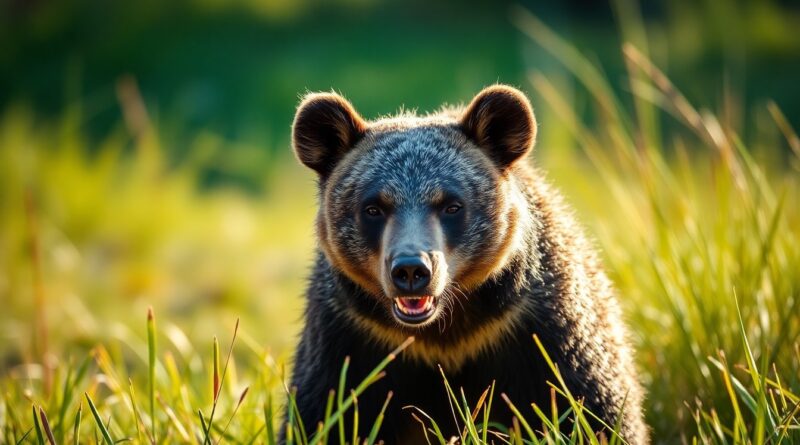
Bears are not just large and powerful — they are among the most cognitively complex animals on the planet. There are eight living bear species, ranging from the polar bear (Ursus maritimus) in the Arctic to the sun bear (Helarctos malayanus) in Southeast Asia’s rainforests. Each has evolved a remarkably different survival strategy, yet all share a common thread: extraordinary adaptability.
The brown bear, arguably the most iconic of the eight species, can consume up to 20,000 calories per day during hyperphagia — the pre-hibernation feeding frenzy — and gain as much as 3 pounds of body weight in a single 24-hour period. Their memory is exceptional. Studies published by researchers at Washington State University have shown that bears can remember the locations of food sources across territories spanning hundreds of square miles, returning to the same berry patches or salmon streams year after year with near-perfect accuracy.
What makes bears particularly relevant in a nature and wildlife conversation is their role as keystone species. When a brown bear catches a salmon and drags it into the forest, it deposits marine-derived nutrients — nitrogen, phosphorus — directly into the soil. Researchers at the University of Victoria, British Columbia, found that trees within 500 metres of salmon streams used by bears grow up to three times faster than trees further away. The ocean feeds the forest, and the bear is the bridge. It’s a reminder that in nature, no animal exists in isolation.
3. Western Australia’s Real Wildlife: The Marine and Nature Wonders Surrounding Perth
Here’s what makes the Perth Bears’ home city genuinely extraordinary from a wildlife perspective: Perth sits at the edge of one of the most biodiverse marine environments on Earth. The Indian Ocean stretches west from Perth’s coastline, and within it lies Ningaloo Reef — a 300-kilometre coral system listed as a UNESCO World Heritage Site in 2011, and one of the few places on the planet where whale sharks (Rhincodon typus), the largest fish in the ocean, gather in predictable numbers every year between March and July.
While bears roam forests and mountains in the Northern Hemisphere, Perth’s surrounding nature offers a completely different kind of awe. Within two hours of HBF Park — where the Perth Bears will play their home games — you can snorkel alongside dolphins at Monkey Mia, watch humpback whales breach in Flinders Bay, and spot Australian sea lions (Neophoca cinerea) hauling out on Carnac Island. The ocean here is not a backdrop; it is alive in a way that few coastal cities in the world can claim.
The Rottnest Island quokka, arguably the world’s most photographed marsupial, lives just 19 kilometres offshore from Perth’s coast. The island also hosts critical seabird nesting colonies. Inland, the Dryandra Woodland is one of the last refuges for the numbat (Myrmecobius fasciatus), Western Australia’s state animal — a termite-eating marsupial so rare that fewer than 1,000 are estimated to survive in the wild.
Perth’s wildlife identity, in other words, doesn’t need a bear. But it welcomes one.
4. Kit Laulilii and the Human Story: How the Perth Bears Are Building Their Pack
Every great wildlife documentary reminds us that the individual matters as much as the species. A pride of lions is fascinating, but it’s the one lion who breaks from the group that changes the story. In the Perth Bears’ case, that individual is Kit Laulilii — one of the first players to formally agree to terms with the new club ahead of the 2027 NRL season.
Laulilii’s signing is significant not just as a rugby league transaction, but as a statement of intent. Expansion teams live or die by their early signings — the players who buy into a project before it has a crowd, a rivalry, or a trophy. Laulilii’s commitment signals belief in what Perth is building, and in the animal identity at its core.
The club has also launched an official merchandise collection, including a training range, giving fans the chance to connect with the team’s identity before a single game has been played. This is smart community-building — the kind that successful sports franchises understand instinctively. You don’t build loyalty on match day. You build it in the years before, one jersey, one mascot appearance, one school visit from Kodi at a time.
For families and wildlife enthusiasts in Perth, the Bears offer something genuinely new: a sports team whose animal symbol invites curiosity rather than just competition. A bear on a jersey is a conversation starter about nature, about ecosystems, about why animals like this one have commanded human respect across every culture that has ever encountered them.
5. The Bear as a Cultural and Conservation Symbol: What Sport Can Teach Us About Wildlife
In 2023, the global bear population across all eight species was estimated at approximately 1.25 million individuals — a number that sounds large until you consider that three of those eight species are listed as vulnerable or threatened on the IUCN Red List. The polar bear faces existential pressure from Arctic sea ice loss, with the IUCN projecting a greater than 30% population decline over the next three generations if current warming trends continue. The sun bear, the smallest of all bear species at just 1.4 metres in length, is losing habitat at a rate tied directly to Southeast Asian deforestation.
Sport has a history of doing something surprising with animal symbols: making people care. The Chicago Bears didn’t save a single grizzly, but generations of fans grew up with a bear as their cultural touchstone. The same dynamic is now possible in Perth. When 30,000 fans pack HBF Park in 2027 to watch the Bears play, and when children across Western Australia wear Kodi’s face on their school bags, a connection is forged — however indirect — between people and the animal world.
Conservation organisations have long understood the power of the flagship species — a single, charismatic animal used to draw attention to broader ecosystem issues. Bears are among the most effective flagship species in the world. They are large enough to be visible, intelligent enough to be relatable, and ecologically important enough that their decline signals serious trouble for the ecosystems they inhabit. If the Perth Bears’ arrival in the NRL sparks even a fraction of Western Australia’s new fan base to look up what a real bear does in the wild, the mascot will have done more than win games.
Final Thought
The Perth Bears are, on the surface, a rugby league story. A new team, a new city, a player named Kit Laulilii committing to a project before it has even played its first game, a mascot named Kodi ready to charm a new generation of fans. But pull the thread a little further, and the bear at the centre of this story opens into something much larger.
It opens into the science of a keystone animal that connects ocean to forest. It opens into the extraordinary marine and nature landscape surrounding Perth — the whale sharks of Ningaloo, the quokkas of Rottnest, the numbats of Dryandra. It opens into a conversation about what it means to choose an animal as your symbol, and what responsibility — however symbolic — comes with that choice.
In 2027, when the Perth Bears run onto the field for the first time, Kodi will be there. And somewhere, in a forest in North America or a mountain range in Europe or a rainforest in Southeast Asia, a real bear will be doing what bears have always done: navigating a complex world with intelligence, adaptability, and quiet power.
That’s worth cheering for.
Frequently Asked Questions
Why is Perth’s NRL team called the Bears?
The Perth Bears inherited their name and identity from the North Sydney Bears, one of the NRL’s founding clubs with over a century of history. The bear symbol was carried west to Perth as the team became the NRL’s 18th expansion side.
When do the Perth Bears start playing in the NRL?
The Perth Bears are set to begin playing in the NRL in the 2027 season, making them the league’s 18th team and playing their home games at HBF Park in Perth, Western Australia.
Who is the Perth Bears mascot?
The Perth Bears’ official mascot is named Kodi, a bear designed to reflect the bold and energetic spirit of Western Australia. Kodi represents the connection between the team’s rugby league heritage and its new Perth identity.
Sources
- https://perthbears.com.au/
- https://en.wikipedia.org/wiki/Perth_Bears
- https://www.zerotackle.com/nrl/teams/perth-bears/
Recommended Reading
Explore these hand-picked resources to dive deeper into this topic:
- The Bear Necessities by Benjamin Lacombe
- Life of Pi by Yann Martel
- BBC Planet Earth II (Documentary Series)
As an Amazon Associate, we earn from qualifying purchases. This helps support Fact Storm Hub at no extra cost to you.
Share this story
🤖 AI Content Disclosure
This article was created using AI-assisted research and writing tools, then reviewed for quality and accuracy. Facts are sourced from publicly available web research, but readers should verify critical information from primary sources.
Published for educational and entertainment purposes. Last reviewed: April 2026