

Nirmal Purja’s 14 Mountains: What Broad Peak Revealed
Nirmal Purja’s 14 Mountains: What Broad Peak Revealed
The call came five days after Nirmal Purja turned 43. An avalanche. Broad Peak. Ten people missing. No contact.
For anyone who has followed his career, that last detail — no contact — is the one that stops you cold. This is a man who documented his way through every death zone on Earth, who turned the most hostile altitudes in the world into a running dispatch. The silence wasn’t just alarming. It was unrecognizable.
The Record That Shouldn’t Exist
Every serious mountaineer knows the number: 14. That’s how many peaks on Earth rise above 8,000 meters — the altitude where the air is so thin that the human body begins to consume itself. Climbers call this zone the “death zone” for a reason. Reaching even one of these summits is considered a life’s achievement. Completing all 14 has historically taken the world’s best climbers years, sometimes decades.
Nirmal Purja — born on 25 July 1983 in Myagdi, Gandaki Province, Nepal — did it in six months and six days.
Read that again. Six months and six days. Not years. Six months.
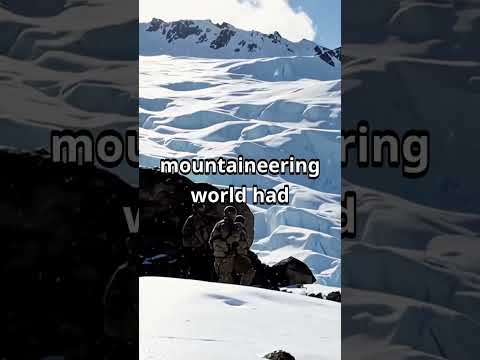
His 2019 campaign shattered a record that had stood for years before him, and it did so by a margin so wide that the mountaineering world had to reconsider what human physiology was actually capable of. The approach was relentless: summit, descend, fly, climb, repeat. The death zone treated not as a final destination but as a recurring stop on a schedule that refused to slow down.
The Soldier Behind the Climber
Purja didn’t arrive at those mountains as a career climber with decades of high-altitude apprenticeship. He came as a soldier.
Before the mountains, he served in the British Special Forces — one of the most demanding military units on Earth. The discipline, the tolerance for physical suffering, the ability to function when the body is screaming to stop: all of it was forged in uniform before it was ever tested at altitude. He also holds the MBE, a British honor awarded for exceptional service or achievement.
That background explains something the statistics alone don’t. Most elite climbers spend years building up to the 8,000-meter peaks. Purja approached them with a soldier’s mindset: assess the objective, plan the mission, execute under pressure. The mountains were the terrain. The summit was the mission.
What makes “Nims” — as he’s known to the climbing community, or “Nimsdai” to those closer to him — genuinely different is that he combined elite physical conditioning with a psychological framework most climbers never develop. Fear management. Team leadership under crisis. The ability to make decisions when oxygen deprivation is actively degrading your judgment. He didn’t just climb faster than anyone before him. He operated differently.
Broad Peak, 30 July 2026
[Editorial note: The following section covers breaking news. Details were unconfirmed at time of publication. The speculative language reflects genuine uncertainty, not editorial ambiguity.]
Broad Peak sits in the Karakoram range in Pakistan, on the border with China. At 8,047 meters, it is one of the 14 eight-thousanders — the same category of mountain Purja conquered in his record-breaking 2019 campaign. It is not considered the most technically difficult of the group, but no mountain at that altitude is forgiving.
At approximately midday on Thursday, 30 July 2026 — five days after Purja turned 43 — an avalanche struck the mountain while he and his group were climbing. Ten people went missing in an instant. The group included climbers from Nepal, Pakistan, Oman, and an American named Mallory Geis.
Ground teams recovered four bodies. As of the reporting date, none had been identified. The Alpine Club of Pakistan confirmed there had been no contact with any of the climbers since the avalanche struck. GPS signals were showing the location of four climbers — a detail that rescue teams were treating carefully, since a GPS device and its owner do not always end up in the same place.
What the Karakoram Has Always Known
There is a particular kind of climber the Karakoram range has claimed over the decades: not the reckless or the underprepared, but the exceptional. The range has a history of taking people who knew exactly what they were doing. That context doesn’t soften the news from Broad Peak. It sharpens it.
Purja’s 2019 achievement changed how a generation thought about high-altitude mountaineering. It demonstrated that with the right conditioning, mindset, and logistical discipline, the death zone’s terms could be pushed further than anyone had believed. That inspiration was real. The climbers it motivated were real.
So is the avalanche. An avalanche does not negotiate with records or credentials. The Karakoram doesn’t adjust its terms for the people most qualified to be there. If anything, the range’s history suggests the opposite — that the climbers who go highest and most often are the ones who eventually meet it at its worst.
Final Thought
The story of Nirmal Purja was never really about the 14 summits. It was about what a human being can do when they refuse to accept the ceiling everyone else has agreed on. Six months and six days to climb every peak above 8,000 meters — that number belongs to the record books regardless of what Broad Peak took on 30 July 2026.
But the avalanche asks a harder question than any summit: not “how high can you go,” but “what does the mountain owe you for getting there?” The answer, as every Karakoram climber knows, is nothing. The record belongs to Purja. The mountain belongs to itself.
Frequently Asked Questions
How long did Nirmal Purja take to climb all 14 eight-thousanders?
Nirmal Purja completed all 14 mountains above 8,000 meters in just six months and six days in 2019, shattering the previous record by such a wide margin that it forced the mountaineering world to reconsider human physical limits.
Where was Nirmal Purja born?
Nirmal Purja was born on 25 July 1983 in Myagdi, Gandaki Province, Nepal, and later went on to serve in the British Special Forces before pursuing his record-breaking mountaineering career.
What happened to Nirmal Purja at Broad Peak?
An avalanche struck Broad Peak five days after Nirmal Purja turned 43, leaving ten people missing and no contact, which was described as deeply alarming given his history of constantly documenting his high-altitude expeditions.
Recommended Reading
Explore these hand-picked resources to dive deeper into this topic:
- Everest by Jon Krakauer
- The Last Leopard: A Life of Giuseppe Tomasi di Lampedusa by Justin Vivian Bond
- National Geographic Atlas of the World (reference guide)
As an Amazon Associate, we earn from qualifying purchases. This helps support Fact Storm Hub at no extra cost to you.
Sources
- https://abc17news.com/news/national-world/cnn-world/2026/07/30/world-renowned-climber-nirmal-purja-among-10-feared-missing-following-avalanche-in-pakistan/
- https://en.wikipedia.org/wiki/Nirmal_Purja
- https://www.kwqc.com/video/2026/07/31/world-renowned-climber-among-10-feared-missing-following-avalanche-pakistan/
- https://www.yahoo.com/news/world/articles/nirmal-purja-among-10-climbers-230012030.html
- https://gripped.com/news/nirmal-nims-purja-among-missing-climbers-after-avalanche/
Watch the Video
🤖 AI Content Disclosure
This article was created using AI-assisted research and writing tools, then reviewed for quality and accuracy. Facts are sourced from publicly available web research, but readers should verify critical information from primary sources.
Published for educational and entertainment purposes. Last reviewed: August 2026