
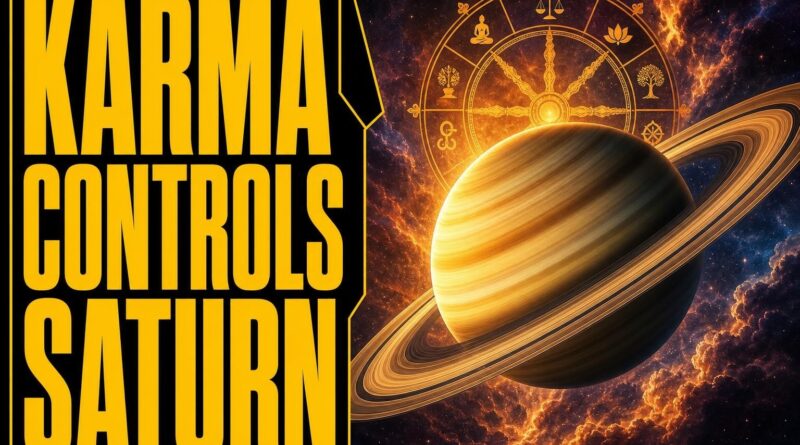
Saturn Planet: The Cosmic Truth Behind Karma
Saturn Planet: The Cosmic Truth Behind Karma
Saturn is trending across India right now — and not because of a NASA launch. Astrologers are announcing that Shani’s retrograde motion has begun, and millions are watching to see which zodiac signs will rise and which will fall. But here’s what most people scrolling through those astrology updates don’t know: the science and mythology of the Saturn planet are tangled together in ways that will genuinely surprise you.
The Son of the Sun — and His Shadow Mother
Kohli has records. Shani has a backstory.
According to Hindu mythology, Lord Shani is the son of Surya Dev — the Sun itself — and a woman named Chhaya, whose name literally means “Shadow.” This is why Shani is also called Chhayaputra, meaning “son of the shadow.”
Think about that for a second. The planet that rules karma and justice is literally born from the union of light and darkness. The Sun’s own shadow gave birth to the Lord of Consequences.
This isn’t just poetic. In Vedic astrology, this parentage explains everything about Saturn’s character. He is not cruel — he is precise. He sees both the bright side and the dark side of every action, because he was born from both. Among the Navagrahas — the nine celestial bodies in Hindu astrology — Saturn holds the seventh position, and that placement alone carries enormous weight in a person’s birth chart.
The mythology makes Saturn one of the most complex characters in any ancient tradition. Not a villain. Not a hero. A judge.
The Lord of Karma — What That Actually Means
Every culture has a concept of consequences. Saturn is Vedic astrology’s answer to that question.
Shani Dev is described as the “Lord of Karma” — the cosmic force that rewards or punishes individuals based on their deeds, not their prayers, not their status, and not their intentions. Their deeds. What you actually did, not what you meant to do.
This is a remarkably modern idea wrapped in ancient mythology. It says the universe is not random. It says there is an accounting system. And Saturn is the accountant.
In practice, this is why Shani is both feared and respected across millions of households in India. A difficult period in your Saturn cycle — called Sade Sati — is seen not as punishment from an angry god, but as a period of reckoning. You are being asked to settle accounts. The harder your Sade Sati, the more you may have been avoiding a truth.
That framing changes everything. Saturn doesn’t destroy. Saturn corrects.
The Two Signs Saturn Rules — and Why They Make Sense
Saturn rules exactly two zodiac signs: Capricorn and Aquarius.
At first glance, those two seem like opposites. Capricorn is the mountain goat — disciplined, ambitious, structured, climbing slowly toward a defined peak. Aquarius is the water-bearer — unconventional, community-focused, willing to break systems that no longer serve people.
But look closer, and both signs share one quality: they play a long game. Capricorn builds institutions. Aquarius rebuilds them when they fail. Both require patience. Both require a willingness to delay short-term comfort for long-term results.
Saturn ruling both makes perfect sense for the Lord of Karma. Karma is not instant. Karma compounds. It is the most patient force in the universe — and so is Saturn.
This is also why astrologers pay close attention when Saturn enters retrograde, as it has now. Retrograde motion is traditionally seen as a period when Saturn turns its gaze inward — a time for review, not new beginnings. The zodiac signs most directly in Saturn’s path during this period are the ones astrologers say will feel the shift most strongly, for better or worse.
The Masculine Planet at Number Seven
Among the Navagrahas — the nine planetary forces in Vedic astrology — Saturn is classified as a planet of masculine energy. It is the seventh among them.
The number seven carries its own significance across cultures, but in the Navagraha system, Saturn’s position as seventh places it at a kind of threshold. The first six planets are considered more personal — they govern the self, the mind, love, communication, and ambition. Saturn at seven is where the personal meets the universal. Where your individual karma meets the larger pattern.
This is why Saturn transits are watched so closely by Vedic astrologers. When Saturn moves — whether direct or retrograde — it is not just shifting a point on a chart. In this tradition, it is the universe adjusting its ledger.
Whether you read that literally or as a metaphor for the natural consequences of long-term behavior, the underlying idea is the same: actions accumulate. Saturn is the planet that reminds you of that.
Final Thought
The Saturn planet has been tracking human behavior — at least in our imagination — for thousands of years. Long before NASA photographed its rings, Vedic astronomers named it the Lord of Karma and assigned it the seventh seat among the Navagrahas, ruler of Capricorn and Aquarius, son of the Sun and the Shadow. That mythology wasn’t accidental. It was built around a real observation: that the slowest-moving visible planet in the sky seems to govern the slowest-moving force in human life. Not luck. Not fate. Consequences. As Saturn’s retrograde cycle draws attention across India right now, the ancient question it raises is the same one it always has: what have you actually been doing with your time?
Frequently Asked Questions
Why is Saturn called the Lord of Karma in Vedic astrology?
Saturn, or Shani Dev, is called the Lord of Karma because he is believed to reward or punish individuals based solely on their actual deeds — not prayers, status, or intentions — making him the cosmic force of consequences in Vedic astrology.
Who are the parents of Lord Shani according to Hindu mythology?
According to Hindu mythology, Lord Shani is the son of Surya Dev, the Sun god, and Chhaya, whose name means ‘Shadow.’ This is why Shani is also called Chhayaputra, meaning ‘son of the shadow.’
What is Saturn’s position among the Navagrahas in Hindu astrology?
Saturn holds the seventh position among the Navagrahas, the nine celestial bodies in Hindu astrology, and that placement carries enormous significance in a person’s birth chart.
Recommended Reading
Explore these hand-picked resources to dive deeper into this topic:
- Cosmos: A Spacetime Odyssey by Carl Sagan
- The Order of Time by Carlo Rovelli
- Celestron AstroMaster 130EQ Telescope (stargazing equipment)
As an Amazon Associate, we earn from qualifying purchases. This helps support Fact Storm Hub at no extra cost to you.
Sources
- https://www.exoticindiaart.com/article/all-about-shani-dev/?srsltid=AfmBOooafrv_LYePDW6O7sW2JDviezFjx_hDMmnSLcLhzssSbCimO_qF
- https://timesofindia.indiatimes.com/astrology/zodiacs-astrology/10-ways-to-please-saturn-or-shani-dev/amp_articleshow/104983133.cms
- https://www.youtube.com/watch?v=DFHP6Y8RQec&vl=en
- https://www.astroved.com/astropedia/en/planets/sani
- https://honestastrologer.com/post/understanding-saturn-shani

🤖 AI Content Disclosure
This article was created using AI-assisted research and writing tools, then reviewed for quality and accuracy. Facts are sourced from publicly available web research, but readers should verify critical information from primary sources.
Published for educational and entertainment purposes. Last reviewed: July 2026