
Mariana Islands Geography Secrets Revealed
Mariana Islands Geography Secrets Revealed
If you took Mount Everest and plunged it into the western Pacific Ocean, its peak would vanish more than two kilometers beneath the waves before touching bottom. This isn’t a thought experiment; it’s the staggering reality of the Mariana Trench, the deepest known point on Earth. This incredible feature of our planet’s geography is more than just a statistic; it’s the heart of a story about immense pressure, volcanic fire, and forgotten history, all centered around the remote Mariana Islands.
1. The Pressure at Challenger Deep Can Crush Steel
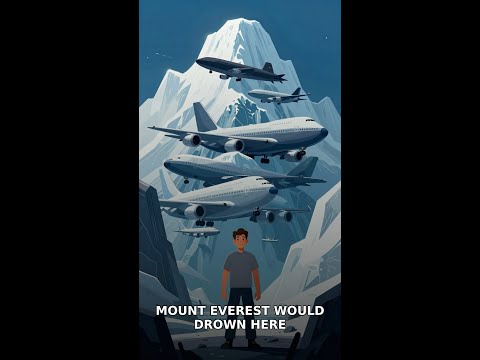
Everyone knows the Mariana Trench is deep. But the numbers are so extreme they almost lose meaning. The deepest point, a small valley at its southern end named Challenger Deep, bottoms out at a confirmed 10,984 meters (36,037 feet). At this depth, the weight of the water column above exerts a pressure of over 1,086 bars—that’s more than 1,000 times the standard atmospheric pressure at sea level. To put that in perspective, it’s the equivalent of having 50 jumbo jets stacked on top of a single person. This pressure would instantly crush a standard military submarine as if it were a soda can.
This mind-bending geography isn’t an accident; it’s the result of a slow-motion geological collision. The colossal Pacific Plate, one of Earth’s largest tectonic plates, is relentlessly sliding beneath the smaller Mariana Plate in a process called subduction. As the Pacific Plate bends and plunges into the Earth’s mantle, it creates this impossibly deep scar on the ocean floor. This process is ancient and ongoing, making the trench one of the most geologically active places on the planet. The very forces that carve out this abyss are a fundamental engine of our planet’s crust, a place where one part of the world is literally being consumed by another.
2. The Islands Themselves Are the Children of the Trench
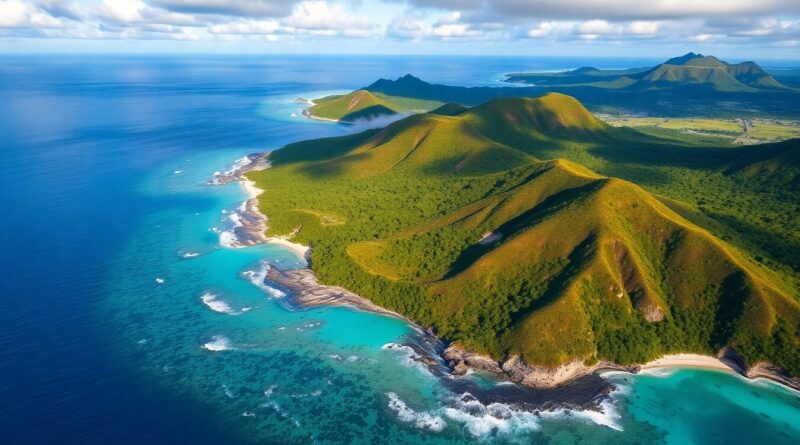
It’s easy to think of the Mariana Islands and the Mariana Trench as separate entities—one a tropical paradise, the other a dark abyss. But in the grand story of this place, they are two sides of the same coin. The same subduction process that drags the Pacific Plate downward also creates the conditions for extreme volcanism. As the descending plate dives deeper, intense heat and pressure force water from the ocean crust, which then melts the rock in the mantle above it. This molten rock, or magma, is less dense than the surrounding material and rises to the surface, erupting to form a chain of volcanic islands. The Mariana Islands are the direct result of this process.
This makes the archipelago an incredible living laboratory for geography. You can stand on the soil of a place like Saipan or Guam, looking out at the Pacific, and know that the very ground beneath your feet was born from the same cataclysmic force that created the 10,984-meter-deep chasm just a few hundred kilometers away. The islands are essentially the fiery exhaust ports of the trench’s subduction engine. This chain includes active volcanoes, both above and below the water, making the entire region part of the Pacific “Ring of Fire,” the world’s most active belt of earthquakes and volcanic eruptions.
3. The U.S. Created a Protected Place Larger Than Any U.S. State
In 2009, the United States designated the Mariana Trench Marine National Monument, creating one of the most unique protected areas on Earth. Spanning over 246,000 square kilometers, this monument is larger than every single U.S. state except for Alaska. What makes it so extraordinary is that it protects a place almost no human will ever see directly. Unlike Yellowstone or the Grand Canyon, this monument preserves the water column and the seafloor of the deepest, darkest, and highest-pressure environments on the planet.
The creation of the monument was a landmark moment for conservation and geography. It acknowledged that even the most remote and seemingly barren places on Earth harbor unique life and geological wonders worth preserving. Scientists exploring the trench have discovered bizarre creatures like the Mariana snailfish, which thrives under pressures that would liquefy bone, and unique microbial ecosystems that “breathe” sulfur and methane from hydrothermal vents. The monument safeguards these habitats from potential deep-sea mining and other disturbances, ensuring that this frontier of discovery remains pristine for future research. It’s a declaration that a place doesn’t have to be accessible to be valuable; its secrets alone are a treasure.
4. An Abandoned Airfield on Tinian Island Ended World War II
While the trench holds Earth’s deepest secrets, the islands hold one of modern history’s most profound. On the small island of Tinian, just 8 kilometers southwest of Saipan, lie the quiet, overgrown remnants of what was once the busiest airport in the world. During World War II, after its capture by U.S. forces in 1944, the Navy Seabees constructed North Field, a massive airbase with four 2,600-meter runways designed for B-29 Superfortress bombers. For a brief period, this remote island place was the epicenter of the final chapter of the war.
From these specific runways, two missions departed that changed the course of history forever. On August 6, 1945, the Enola Gay took off from Runway Able, carrying the atomic bomb destined for Hiroshima. Three days later, Bockscar departed from the same field to drop a second bomb on Nagasaki. Today, the runways are largely abandoned, cracked pavement being slowly reclaimed by tropical vegetation. You can visit the bomb pits where the weapons were loaded and stand on the very spot where the planes began their fateful journeys. This quiet, almost forgotten city of runways serves as a haunting link between a remote point of geography and a moment that irrevocably altered human civilization.
Final Thought
The Mariana Islands region is a place of staggering superlatives—the deepest trench, the highest pressure, the most violent geological forces. But its story isn’t just about what lies beneath the waves. It’s a narrative woven between the abyss and the islands, between volcanic creation and human history. From the crushing darkness of Challenger Deep to the sun-bleached, abandoned runways of Tinian, this small corner of the Pacific reminds us that the most significant places on our map are often where the extremes of nature and the ambitions of humanity collide.
Sources
- https://www.youtube.com/watch?v=mQutXlTHCOU
- https://en.wikipedia.org/wiki/Mariana_Trench
- https://www.youtube.com/watch?v=ZC0DxdjTjT8
- https://www.discovermagazine.com/what-has-been-found-in-the-deep-waters-of-the-mariana-trench-45102
- https://www.youtube.com/watch?v=gLSTGSTsXpM
Recommended Reading
Explore these hand-picked resources to dive deeper into this topic:
- The World in a Bottle: Travels Through Time and Space by Charles Foster
- Islands: A Life Above the Waves by Philip Croutier
- National Geographic Atlas (comprehensive reference)
As an Amazon Associate, we earn from qualifying purchases. This helps support Fact Storm Hub at no extra cost to you.
Share this story
🤖 AI Content Disclosure
This article was created using AI-assisted research and writing tools, then reviewed for quality and accuracy. Facts are sourced from publicly available web research, but readers should verify critical information from primary sources.
Published for educational and entertainment purposes. Last reviewed: April 2026