
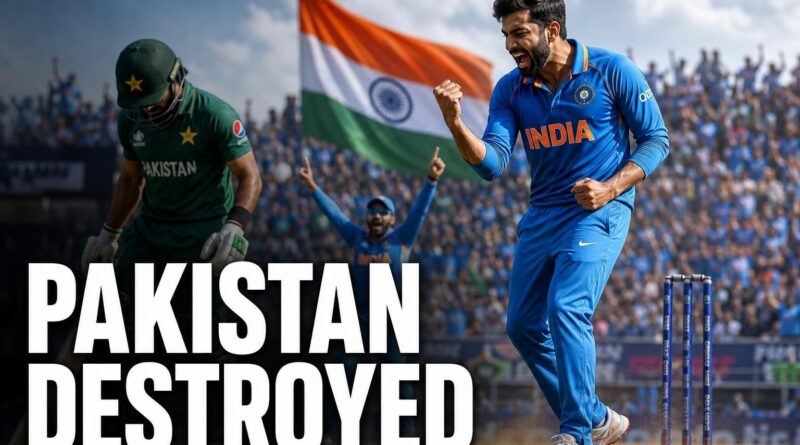
India’s Spinner: Pakistan’s Twenty20 Nightmare
India’s Spinner: Pakistan’s Twenty20 Nightmare
A week ago, Pakistan’s women’s cricket team walked onto the field confident. They left bowled out for 106.
One Indian spinner did most of the damage. Five wickets. Sixty-four runs. A demolition so complete it sent shockwaves through the Women’s T20 World Cup — and reminded everyone exactly why Twenty20 cricket is the most brutal format ever invented.
But to understand why that match mattered, you need to understand what Twenty20 actually is, where it came from, and why it keeps rewriting cricket history every single year.
What Twenty20 Actually Changed About Cricket
Before Twenty20 existed, cricket was a sport that asked for patience. Test matches ran five days. One-day internationals lasted eight hours. The average fan — especially a young one — had to commit their entire day just to see a result.
Twenty20 flipped that completely.
The format was introduced at the professional level by the England and Wales Cricket Board as a shortened version of the game — twenty overs per side, results in roughly three hours. The idea was simple: give fans a full match in the time it takes to watch a movie. What nobody predicted was how completely it would transform the sport’s global reach, its economics, and the kind of cricketers who would become legends inside it.
Suddenly, a bowler who took five wickets in twenty overs wasn’t just useful — she was the difference between winning and losing. A batsman who scored fast wasn’t just entertaining — he was the entire team’s strategy. Every single delivery carried weight that simply doesn’t exist in longer formats.
The Match That Pakistan Won’t Forget
Deepti Sharma didn’t just bowl well against Pakistan. She dismantled them.
Five wickets. Pakistan all out for 106. India winning by 64 runs. Those numbers tell you the scoreline — but they don’t tell you what it means inside a Twenty20 match.
In a format where teams typically target 150 or more runs, being bowled out for 106 is a collapse. It means the batting lineup never found rhythm, never steadied, never recovered from early pressure. And that pressure came almost entirely from one spinner working through an international lineup with clinical precision.
For India, it was the perfect opening to their Women’s T20 World Cup campaign. For Pakistan, it was the kind of result that forces a team to question its preparation, its batting order, and its ability to handle spin under pressure. That question doesn’t go away after one match — it follows a team through the entire tournament.
Why the Format Keeps Growing
Twenty20 didn’t just change how cricket is played. It changed who gets to play it.
Starting in 2024, the ICC expanded the Men’s T20 World Cup from 16 to 20 teams. That’s not a small administrative decision — it’s a recognition that Twenty20 has pulled cricket into countries and communities that Test cricket never reached. Smaller nations now have a genuine pathway to the sport’s biggest stage.
India won the 2024 T20 World Cup, a tournament that also marked the final T20 international campaign for Virat Kohli — one of the format’s defining batsmen. The timing was deliberate and emotional. Kohli had been central to Indian cricket’s T20 identity for years. His exit from the format in a tournament India won was the kind of ending that cricket rarely scripts so neatly.
The next Men’s T20 World Cup is set to take place from February 7 to March 8, 2026, with India and Sri Lanka as co-hosts. That tournament will arrive with a new generation of Indian players carrying the weight of a recently won title — and a home crowd that will expect nothing less.
The Pressure Nobody Talks About
Here’s what makes Twenty20 genuinely different from every other format: there is no recovery time.
In a Test match, a team can absorb a bad session and rebuild over two days. In a one-day international, a strong middle-order partnership can rescue a collapsed top order. In Twenty20, by the time the middle order arrives, the damage is often already done.
Deepti Sharma’s five-wicket haul against Pakistan illustrated this perfectly. Once the top order went, Pakistan’s innings never had the overs left to rebuild. That’s Twenty20’s core brutality — it compresses consequence. Every wicket matters more. Every over matters more. Every decision, from team selection to field placement to bowling change, carries an urgency that longer formats simply don’t demand.
This is why spinners like Deepti Sharma become match-winners in conditions that suit them. Twenty20 rewards specialists. It rewards players who can do one thing at the highest level under the most compressed pressure. And it punishes teams who haven’t prepared for exactly that.
Final Thought
Twenty20 cricket was built to be fast. What nobody anticipated was how fast it would make careers, how fast it would end them, and how fast it would expose the gaps in a team’s preparation. Deepti Sharma’s five-wicket demolition of Pakistan for 106 wasn’t a fluke — it was Twenty20 doing exactly what it was designed to do: forcing a result before anyone has time to adjust. With India and Sri Lanka set to co-host the 2026 Men’s T20 World Cup, the format is only getting bigger. The only question is which spinner, which innings, which single over will define it next.
Frequently Asked Questions
What is Twenty20 cricket and how is it different from other formats?
Twenty20 cricket is a shortened format with twenty overs per side, producing results in roughly three hours. Unlike Test matches that run five days or one-day internationals lasting eight hours, T20 delivers a complete match in the time it takes to watch a movie.
Who introduced Twenty20 cricket professionally?
The England and Wales Cricket Board introduced Twenty20 cricket professionally as a shortened version of the game, designed to attract fans who couldn’t commit an entire day to longer formats like Test matches or one-day internationals.
What happened when India played Pakistan in the Women’s T20 World Cup?
Indian spinner Deepti Sharma took five wickets, bowling Pakistan out for just 106 runs. India won by 64 runs in a dominant performance that highlighted how a single spinner can completely dismantle a team in the Twenty20 format.
Recommended Reading
Explore these hand-picked resources to dive deeper into this topic:
As an Amazon Associate, we earn from qualifying purchases. This helps support Fact Storm Hub at no extra cost to you.
Sources
- https://en.wikipedia.org/wiki/Twenty20
- https://www.britannica.com/sports/Twenty20-cricket
- https://www.espncricinfo.com/cricketers/team/india-6/caps/twenty20-international-3
- https://www.aljazeera.com/sports/2026/6/14/india-beat-pakistan-by-64-runs-to-open-womens-t20-world-cup-campaign

🤖 AI Content Disclosure
This article was created using AI-assisted research and writing tools, then reviewed for quality and accuracy. Facts are sourced from publicly available web research, but readers should verify critical information from primary sources.
Published for educational and entertainment purposes. Last reviewed: June 2026