
India’s Bank Notes Are Changing Forever
India’s Bank Notes Are Changing Forever
India’s money is getting a makeover — and most people have no idea it’s happening.
The Reserve Bank of India has quietly issued a global tender, inviting manufacturers from around the world to supply the raw material for a new kind of currency. Not a new design. Not a new denomination. A completely different material. starting with ₹10 and ₹20 bank notes, India is about to test something that dozens of countries have already quietly switched to — and the results, when they did, were extraordinary.
What “Plastic Money” Actually Means
Forget the phrase “plastic money” — that’s just credit cards. This is something different.
Polymer bank notes are printed on a thin, flexible substrate made from a type of plastic film rather than the cotton-and-paper blend used in traditional currency. To the touch, they feel slightly smoother. Hold one up to light, and you’ll notice a transparent window built directly into the note — a security feature that’s nearly impossible to fake with a home printer.
The RBI’s note-printing unit issued a global Expression of Interest (EOI), with bids due by August 18, specifically for the manufacturing and supply of these polymer substrate sheets. The pilot will start with ₹10 and ₹20 denominations, with a full-scale rollout expected across India by 2027.
The critical detail most news reports buried: existing paper bank notes are not going anywhere. Both types will circulate together. This isn’t a replacement — it’s an experiment running in parallel.
The Problem With Paper That Nobody Talks About
Walk into any busy market in India — a sabzi mandi, a railway station, a local kirana store — and look at the ₹10 notes changing hands. Many are torn at the folds. Some are held together with tape. A few are so worn that the serial number is barely readable.
That vendor’s taped-together ₹10 note isn’t just an eyesore — it’s a cost. Every note that degrades beyond use has to be pulled from circulation, destroyed, and replaced with a freshly printed one. Multiply that single worn note by the hundreds of millions of low-denomination bills cycling through India’s markets every day, and the replacement printing cycle becomes one of the most quietly expensive operations a central bank runs. It never stops.
Polymer notes break that cycle. The RBI has described them as resistant to water, dirt, and dust — and critically, resistant to tearing. A note that survives a monsoon downpour intact, or survives being washed in a pocket, stays in circulation far longer. Fewer replacements. Lower long-term cost. Less waste.
The Design Behind the New Series
While the material is new, the identity on these bank notes stays deeply familiar.
India’s current currency belongs to the Mahatma Gandhi Series — a design framework that has defined Indian bank notes for decades. That series isn’t changing. What’s evolving is the storytelling embedded within it.
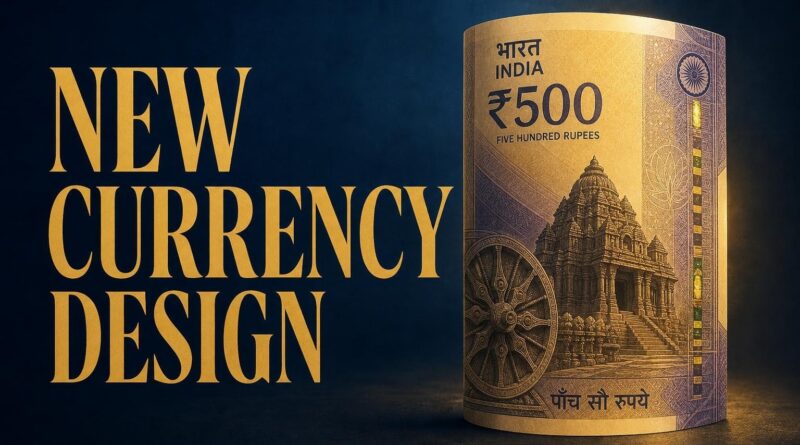
The new notes in this series use India’s heritage sites as a central design theme — a deliberate choice that transforms everyday currency into a moving showcase of the country’s history and architecture. Bank notes are one of the few objects that every single citizen of a country touches. They’re a canvas that travels — from a farmer’s hand in a village to a trader’s pocket in a city. The design team at the RBI understood that. The inclusion of Devanagari numerals and the Swachh Bharat logo on the new notes reinforces that these aren’t just financial instruments. They carry a message about national identity every time they change hands.
Polymer bank notes will carry this same design language — same heritage theme, same familiar face, different material.
Why 2027 Is the Year to Watch
A pilot program sounds cautious. It is. And that’s the point.
Switching the material of a nation’s currency isn’t like updating an app. It requires recalibrating ATMs, training bank staff, educating the public, and ensuring that counterfeiters can’t reverse-engineer the new substrate. The global EOI tender is the first step — finding manufacturers who can supply polymer sheets at the scale India needs.
The ₹10 and ₹20 denominations were chosen deliberately for the pilot. They’re high-circulation, low-value notes — the ones that change hands most frequently and wear out fastest. If polymer performs well at that level, the case for expanding to higher denominations becomes much stronger.
If the pilot results are clean, 2027 is when India joins a list of countries that have already made this transition — quietly, without fanfare, one denomination at a time.
Final Thought
What happens in India’s ₹10 and ₹20 pilot over the next two years won’t just determine the future of Indian currency — it will answer a question every major emerging economy is quietly watching: can a nation of this scale and complexity make the switch, and what does the blueprint look like when it does?
Frequently Asked Questions
What are polymer bank notes in India?
Polymer bank notes are currency printed on a thin, flexible plastic film instead of the traditional cotton-and-paper blend. They feature a transparent window built into the note, making them more secure and nearly impossible to counterfeit with a home printer.
Which Indian currency notes will be replaced with polymer notes?
India’s pilot program will start with ₹10 and ₹20 denominations printed on polymer substrate. Existing paper notes will not be removed from circulation — both types will circulate together during the experiment.
When will India launch polymer currency notes?
The Reserve Bank of India issued a global tender for polymer substrate sheets, with bids due by August 18. A full-scale rollout of polymer bank notes across India is expected by 2027.
Recommended Reading
Explore these hand-picked resources to dive deeper into this topic:
- The Ascent of Money by Niall Ferguson
- India After Gandhi by Ramachandra Guha
- RBI Monetary Policy Documentary Series (educational video collection)
As an Amazon Associate, we earn from qualifying purchases. This helps support Fact Storm Hub at no extra cost to you.
Sources
- https://www.youtube.com/watch?v=il3urYLUZsc
- https://paisaboltahai.rbi.org.in/
- https://www.bhaskarenglish.in/amp/business/news/rbi-plastic-polymer-currency-notes-india-trial-launch-2027-138465757.html
- https://en.wikipedia.org/wiki/Indian_rupee
- https://www.youtube.com/watch?v=pkHZSwK9r0Y

🤖 AI Content Disclosure
This article was created using AI-assisted research and writing tools, then reviewed for quality and accuracy. Facts are sourced from publicly available web research, but readers should verify critical information from primary sources.
Published for educational and entertainment purposes. Last reviewed: July 2026