
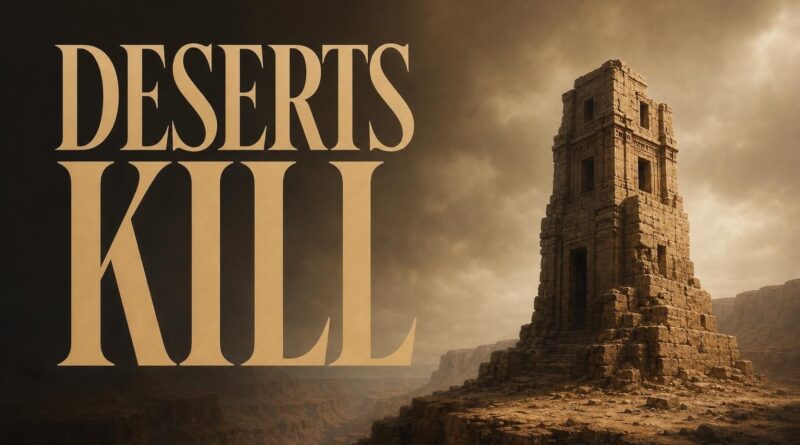
Grand Canyon Floods: Why Deserts Kill
Grand Canyon Floods: Why Deserts Kill
This week, the Grand Canyon made headlines for something that stopped people mid-scroll: a flash flood tore through one of the most visited places on Earth, killing at least two people, sending rescue teams scrambling to airlift more than 80 hikers to safety, and leaving roughly 15 people unaccounted for in the immediate aftermath.
The canyon receives less than 10 inches of rain per year. That’s drier than most deserts. And yet, on Saturday, August 30, 2026, it nearly swallowed dozens of people whole.
That contradiction — a near-desert that can flood with terrifying speed — is the real story of the Grand Canyon. And understanding it might just save a life.
The Canyon That Tricks You
Most people picture the Grand Canyon as a sun-baked landscape of red rock and silence. That picture is accurate, most of the time. The canyon floor is one of the driest inhabited environments in North America, averaging less than 10 inches of annual rainfall. To put that in perspective, that’s roughly the same as the Sahara’s more generous edges.
So when tourists book a hike down to Bright Angel Creek, they’re not thinking about water. They’re thinking about heat, dehydration, the long climb back up. Flash flooding doesn’t make the packing list.
That’s the first and most dangerous illusion the Grand Canyon sells.
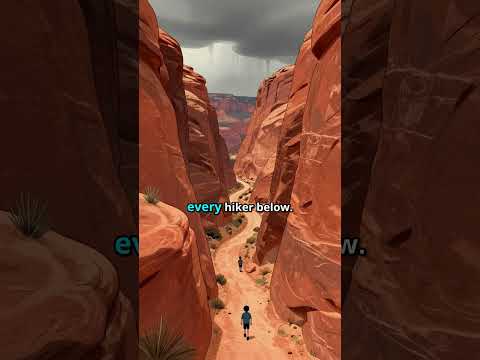
The canyon’s geography is the trap. Its walls are steep, its corridors are narrow, and its creek beds funnel water from a drainage basin that stretches far beyond what any hiker standing at the bottom can see. A storm doesn’t have to be directly above you to kill you. It just has to be raining somewhere upstream.
By the time you hear the roar, you may have seconds — not minutes — to react.
Four Waves in a Weekend
The August 30 flood wasn’t a single downpour. The National Weather Service reported four distinct “waves of rainfall” over two creek drainages during that weekend. Each wave added to what the canyon couldn’t absorb. The terrain, baked dry for most of the year, doesn’t soak up sudden water — it sheds it, channeling every drop downhill at speed.
Bright Angel Creek, one of the canyon’s main water corridors, became the flood’s primary path. Storm activity there fueled a surge powerful enough to damage the only water pipeline serving the canyon’s year-round residents — the single lifeline that keeps the small community inside the park functioning.
That detail is worth sitting with. One pipeline. The entire water infrastructure for people who live inside one of the world’s most famous natural landmarks runs through a single line. When the flood hit it, park officials immediately imposed emergency water restrictions. Tourists were barred from staying in lodges and hotels inside the park. The canyon, which welcomes millions of visitors every year, had to close its doors mid-season.
More than 80 people were pulled out of the canyon — some airlifted, some guided out on foot by rescue teams working against the clock.
Why Flash Floods Hit So Fast Here
Three deliveries. That’s roughly how long you’d have to react if you were standing in a narrow canyon corridor when a flash flood wave arrives.
Flash floods are dangerous everywhere, but the Grand Canyon’s shape makes them uniquely lethal. The canyon is essentially a series of funnels stacked inside each other. Water that falls across a massive surface area — the plateau above — gets squeezed into progressively narrower channels as it descends. By the time it reaches creek level, it’s moving fast, carrying debris, and carrying far more volume than the rainfall at any single point would suggest.
The National Park Service has long documented this risk. The canyon receives under 10 inches of rain annually, but that rain rarely falls gently. It tends to arrive in concentrated bursts — monsoon-style storms that dump water faster than the rock can channel it away. The result is a landscape that is bone-dry for months, then violently wet for hours, then dry again.
Hikers who plan around the average miss the extremes. And in the Grand Canyon, the extremes are what kill you.
The People Who Live at the Bottom
Here’s what most visitors never consider: people actually live inside the Grand Canyon year-round.
The canyon has a small permanent resident population — park staff, service workers, and members of the Havasupai tribe, whose ancestral home sits within the canyon walls. These residents depend on infrastructure that, by necessity, runs through terrain that floods, erodes, and shifts. The water pipeline damaged in the August 30 flood isn’t a backup system or a temporary fix. It is the system.
When it went down, emergency water restrictions followed immediately. The park couldn’t simply redirect supply from somewhere else. There is no somewhere else.
This is the hidden cost of living inside a wonder of the world. The canyon’s beauty and its danger are the same thing — the same steep walls, the same narrow corridors, the same geology that makes it one of the most spectacular places on Earth also makes it one of the most difficult to protect people inside.
The tourists who were barred from lodges after the flood had somewhere else to go. The year-round residents didn’t have that option.
What the Canyon Has Always Been
Long before it became a national park, the Grand Canyon was a place that demanded respect from everyone who entered it. The Havasupai people, who have lived in and around the canyon for centuries, understood its rhythms in a way that no hiking guide can fully capture. They knew which seasons brought danger, which corridors flooded, which routes were safe.
That knowledge was built over generations of watching the canyon behave — not as a static backdrop, but as a living system with its own logic.
Modern visitors arrive with GPS, trail maps, and weather apps. Those tools are genuinely useful. But the August 30 flood is a reminder that the canyon’s timeline operates on a scale that outpaces any forecast. Four waves of rainfall across a weekend, a single pipeline destroyed, 15 people unaccounted for — none of that was on anyone’s itinerary.
The canyon has always been this way. It’s only the visitors who are new.
Final Thought
The Grand Canyon doesn’t become more dangerous when it rains. It becomes dangerous because it almost never rains — and then, suddenly, it does. The August 30, 2026 flood didn’t reveal a flaw in the canyon. It revealed a flaw in how we read it.
More than 80 people were rescued that weekend. Two were not. And as of this writing, the search for those still missing continues. The single water pipeline that keeps the canyon’s residents alive remains damaged. The lodges are empty.
The Grand Canyon is 277 miles long, a mile deep, and has been carved over millions of years by the Colorado River. It is not a park that tolerates assumptions. The next time you see someone describe it as a “safe” hike in dry weather, remember Bright Angel Creek on August 30 — and what four waves of rain can do to a place that gets fewer than 10 inches a year.
Frequently Asked Questions
How does the Grand Canyon flood if it gets less than 10 inches of rain per year?
The Grand Canyon’s steep walls and narrow corridors funnel water from a vast drainage basin far beyond what hikers can see. A storm upstream — not directly overhead — can send a deadly flash flood through the canyon within seconds.
What caused the Grand Canyon flash flood on August 30 2026?
The National Weather Service reported four distinct waves of rainfall over two creek drainages on August 30, 2026, triggering a flash flood that killed at least two people and required the airlift rescue of more than 80 hikers.
Is the Grand Canyon dangerous for hiking due to flash floods?
Yes. The canyon’s narrow corridors and steep walls make it extremely vulnerable to flash floods, even in dry conditions. Storms upstream can trigger deadly flooding with little warning, giving hikers only seconds to react.
Recommended Reading
Explore these hand-picked resources to dive deeper into this topic:
- Cadillac Desert by Marc Reisner
- The Hidden Canyon by Michael P. Ghiglieri
- National Geographic Atlas of the World (comprehensive reference)
As an Amazon Associate, we earn from qualifying purchases. This helps support Fact Storm Hub at no extra cost to you.
Sources
- https://www.pbs.org/newshour/nation/1-dead-and-several-missing-or-unaccounted-for-after-grand-canyon-flash-flood-park-service-says
- https://www.youtube.com/watch?v=EkGbyeCdvhY
- https://news.sky.com/story/grand-canyon-flash-floods-leave-one-dead-and-15-missing-13579329
- https://www.today.com/video/grand-canyon-flash-floods-leave-2-dead-1-missing-269143109978
- https://www.bbc.com/news/videos/clylkj1jz4do
🤖 AI Content Disclosure
This article was created using AI-assisted research and writing tools, then reviewed for quality and accuracy. Facts are sourced from publicly available web research, but readers should verify critical information from primary sources.
Published for educational and entertainment purposes. Last reviewed: September 2026