

Presidential Drama: The $4.3B Space Telescope Story
Presidential Drama: The $4.3B Space Telescope Story
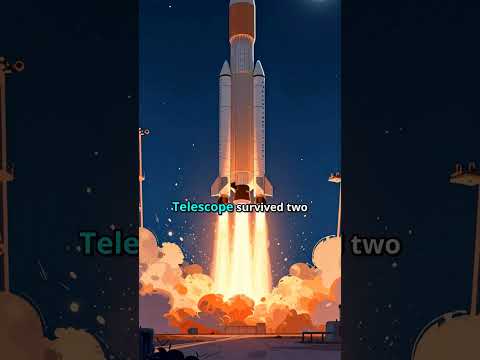
On August 29, 2026, a SpaceX Falcon Heavy rocket tore away from Kennedy Space Center in Florida carrying a telescope that had survived something almost as brutal as the vacuum of space: two separate White House attempts to cancel it entirely.
The president who signed off on those budget cuts? Donald Trump. The person who called into NASA’s post-launch press conference the very next day to congratulate the team? Also Donald Trump.
That tension — between the politics that nearly killed this mission and the science that kept it alive — is the real story of the Nancy Grace Roman Space Telescope. And it’s only just beginning.
The Woman Behind the Name
Before the budget battles and the billion-dollar launch costs, there was Nancy Grace Roman herself.
Roman was NASA’s first chief of astronomy. She spent her career making the case for space-based astronomy at a time when the field was still finding its footing, and when women in senior scientific roles were genuinely rare. She died in 2018, never seeing the telescope that would carry her name reach the launchpad.
Naming a telescope after someone is one of science’s highest honours. The Hubble Space Telescope carried Edwin Hubble’s name. the James Webb Space Telescope carried the name of a former NASA administrator. Roman joins that lineage — a scientist who helped make modern space observation possible, now immortalised in a machine designed to push that work further than she could have imagined.
The irony cuts deep: a telescope named after a woman who spent her career fighting institutional resistance, nearly cancelled by institutional decisions before it ever left the ground.
The Two Times Someone Almost Pulled the Plug
Here’s what doesn’t make it into the celebration headlines: the Roman Space Telescope faced not one, but two separate rounds of proposed White House budget cuts under President Trump.
Think about what that means in practice. Scientists, engineers, and project managers — people who had spent years, in some cases over a decade, working on this mission — had to watch their project get lined up for cancellation. Twice. They had to keep building anyway, keep solving problems, keep believing the telescope would eventually fly, while the political ground kept shifting beneath them.
The telescope’s total cost came to $4.3 billion. That’s not a small line item to protect. Every time budget proposals circulated in Washington, Roman was on the chopping block.
It survived because of the people who refused to let it die — scientists, engineers, and advocates who made the case, again and again, that the science was worth it. And on August 30, 2026, the president who had twice tried to cancel the mission called into NASA’s press conference to congratulate the team on its success.
Science is patient in ways that politics rarely is.
One Million Miles From Home
But celebration would have to wait — Roman still had a million miles to travel.
That journey doesn’t end in orbit. Roman is bound for a gravitational sweet spot called the second Lagrange point, or L2 — a location where a spacecraft can maintain a stable position relative to Earth while facing permanently outward into deep space. It’s the same destination as the James Webb Space Telescope, chosen for the same reason: at L2, the Sun’s interference falls away, and the universe opens up.
The journey there takes weeks. Roman travels in infrared light, designed to detect the faint heat signatures of distant worlds and ancient cosmic structures that visible light can’t reach. The Falcon Heavy — one of the most powerful operational rockets currently flying — was the vehicle that sent it on its way. A $4.3 billion telescope demands serious lifting capacity, and SpaceX’s workhorse delivered.
When Roman finally settles into position, its wide field of view will begin sweeping the sky in a way no telescope before it has managed at this scale.
What Roman Is Actually Looking For
The Roman Space Telescope’s primary mission centres on two enormous questions: Are there other planets out there? And how did planetary systems — including ours — actually form?
Roman is designed to search for exoplanets: planets orbiting stars other than our Sun. Other NASA missions have already found thousands of exoplanets, but what Roman brings is scale. Its wide field of view allows it to survey vast regions of the sky simultaneously, hunting for the faint signals produced when a planet passes in front of its star and dims its light by a fraction of a percent.
Beyond exoplanets, Roman will gather data about planetary formation — the process by which clouds of gas and dust collapse and gradually organise into structured solar systems capable of producing rocky planets like Earth.
Every one of these questions has been sitting unanswered, or only partially answered, for decades. Roman was built to take a serious, sustained run at them — and it carries enough capability that the discoveries it makes may reshape questions we haven’t thought to ask yet.
“A Starting Point for the Scientists”
The morning after launch, Julie McEnery — the Roman Space Telescope’s senior project scientist — said something worth remembering.
“An endpoint for the engineers, but it’s a starting point for the scientists.”
That single sentence captures the strange dual nature of a mission like this. For the engineers who spent years designing the telescope, testing it, troubleshooting problems, and finally watching it lift off on a column of fire — the launch is the finish line. Their work is done.
For the scientists, August 29, 2026, was day one. The data hasn’t arrived yet. The discoveries haven’t been made. The questions Roman was built to answer are still questions. The telescope is a million miles from home and still travelling — and the most important part of its story hasn’t been written yet.
That’s what makes this mission worth following. Not just what it survived to reach the launchpad, but what it might find when it gets there.
Frequently Asked Questions
When did the Nancy Grace Roman Space Telescope launch?
The Nancy Grace Roman Space Telescope launched on August 29, 2026, aboard a SpaceX Falcon Heavy rocket from Kennedy Space Center in Florida.
Who was Nancy Grace Roman and why is the telescope named after her?
Nancy Grace Roman was NASA’s first chief of astronomy, a pioneering scientist who championed space-based astronomy when women in senior scientific roles were rare. She died in 2018 before seeing the telescope named in her honour.
Did Trump try to cancel the Nancy Grace Roman Space Telescope?
Yes, the Trump administration proposed two separate rounds of budget cuts that would have cancelled the Roman Space Telescope. Despite this, Trump called into NASA’s post-launch press conference the day after launch to congratulate the team.
Recommended Reading
Explore these hand-picked resources to dive deeper into this topic:
- Astrophysics for People in a Hurry by Neil deGrasse Tyson
- The Elegant Universe by Brian Greene
- Celestron NexStar 8SE Telescope (computerized space explorer)
As an Amazon Associate, we earn from qualifying purchases. This helps support Fact Storm Hub at no extra cost to you.
Sources
- https://www.theguardian.com/science/2026/aug/29/nasa-telescope-launch-nancy-grace-roman
- https://www.space.com/space-exploration/launches-spacecraft/trump-tried-to-scrap-nasas-roman-space-telescope-last-year-now-its-ready-to-launch
- https://www.yahoo.com/news/science/articles/nancy-grace-roman-telescope-live-120000204.html
- https://www.foxnews.com/video/6404276528112
- https://www.nasa.gov/news-release/nasa-sets-coverage-for-roman-space-telescope-launch-from-florida/
🤖 AI Content Disclosure
This article was created using AI-assisted research and writing tools, then reviewed for quality and accuracy. Facts are sourced from publicly available web research, but readers should verify critical information from primary sources.
Published for educational and entertainment purposes. Last reviewed: August 2026