
Congo Ebola Outbreak: What Experts Aren’t Saying
Congo Ebola Outbreak: What Experts Aren’t Saying
In the news right now, the Democratic Republic of the Congo is fighting an Ebola outbreak. But this isn’t just another outbreak update. This is the story of a virus that has almost no weapons pointed at it — no licensed vaccine, no approved treatment — and a death toll that has already crossed 1,500 people.
The congo ebola situation unfolding in 2026 is unlike anything the DRC has faced before. Here’s why.
The Virus Nobody Prepared For
Most people, when they hear “Ebola,” picture the strain that devastated West Africa and triggered global panic. That strain — Zaire ebolavirus — has a vaccine. Researchers spent years developing it. Health workers can deploy it.
Bundibugyo virus is different.
It belongs to the same family of Ebola viruses, but it has caused only two outbreaks before this current one — one in Uganda in 2007, and one in the DRC in 2012. Two outbreaks in nearly two decades. That’s rare enough that the global health community never had the same urgency to develop a vaccine or treatment for it. Why rush a solution for a virus that barely appears?
That logic made sense on paper. In practice, it left an entire outbreak with nothing to fight back with.
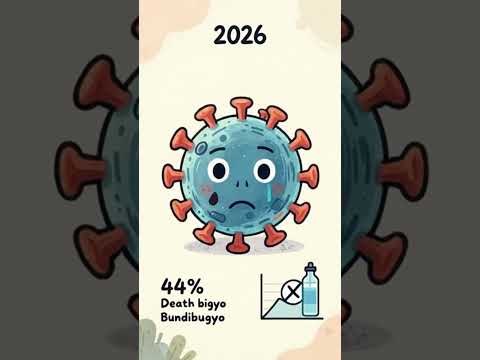
As of 30 July 2026, 3,605 confirmed cases have been recorded, with 1,587 deaths — a case fatality rate of 44%. Nearly one in every two confirmed patients has died. For context, that’s not a number you see in outbreaks where medicine has caught up with the disease. That’s a number you see when a virus is running ahead of every tool available to stop it.
This is the seventeenth Ebola outbreak in the DRC’s history. The country has survived sixteen before. But this one arrived carrying a pathogen that has almost no playbook written for it.
How It Started — And How Fast It Moved
By the time the Institut National de Recherche Biomédicale in Kinshasa confirmed Bundibugyo virus in Ituri Province, the situation was already beyond the earliest stage of containment. Officials had already recorded 246 suspected cases and 80 suspected deaths across several health zones before the laboratory confirmation even came back.
That gap — between when a disease starts spreading and when it gets officially identified — is where outbreaks find their footing.
The outbreak began in the Mongbwalu health zone in Ituri Province. Ituri sits in northeastern DRC, a region with difficult terrain, limited infrastructure, and a history of conflict that makes health response complicated. From there, the virus moved. Confirmed cases spread into Haut-Uélé, Nord-Kivu, and Tshopo provinces. And then it crossed a border.
Cases were logged in Kampala, the capital of neighbouring Uganda.
That detail matters enormously. Kampala is a major regional hub — a city with international air connections, dense population, and constant movement of people across East Africa. The moment a Bundibugyo virus case appeared there, this stopped being a remote provincial outbreak and became a regional threat.
The Africa Centres for Disease Control and Prevention responded on 18 May 2026 by declaring a Public Health Emergency of Continental Security and naming ten other countries at high risk of spread. Ten countries. That’s the scale of the concern this outbreak triggered within weeks of escalation.
The Day the World Officially Took Notice
On 17 May 2026, the World Health Organization declared the Bundibugyo virus outbreak in the DRC a Public Health Emergency of International Concern — the highest alert level the WHO can issue.
That designation — known as a PHEIC — is not handed out lightly. In the entire history of the WHO, it has been declared only a handful of times. COVID-19 was one. The 2014 West Africa Ebola crisis was another. Each declaration is a signal to governments, health agencies, and border authorities worldwide: this requires your immediate attention and resources.
The WHO’s declaration on 17 May 2026 came just one day before the Africa CDC’s continental emergency announcement. Two major health bodies raising the alarm within 24 hours of each other tells you something about the speed at which the situation was escalating.
What makes this declaration particularly striking is the underlying reason. It isn’t just the case count or the death toll — though both are severe. It’s the combination of factors: a virus with no licensed vaccine, an outbreak that had already crossed into a capital city, and a region where health infrastructure is stretched thin even in calm times.
The world has frameworks for fighting Zaire ebolavirus. It built those frameworks after watching the virus kill thousands. For Bundibugyo virus, those frameworks simply don’t exist yet. The 2026 outbreak is, in a very real sense, the moment that forces the world to reckon with that gap.
The Unanswered Question at the Center of All of This
So why does Bundibugyo virus have no vaccine?
The honest answer is that the global health system, despite its best intentions, tends to prioritize threats that have already caused mass casualties on a scale large enough to generate political will and funding. The 2007 Uganda outbreak and the 2012 DRC outbreak were serious — but they were contained relatively quickly, and the numbers, while tragic, didn’t reach the scale that triggers billion-dollar research programs.
Vaccine development is expensive, slow, and requires sustained investment over years. Without a large and recurring threat, that investment is hard to justify to funders. It’s a brutal calculation, and it isn’t unique to Bundibugyo virus — there are dozens of known pathogens for which no vaccine exists, precisely because they haven’t yet caused the “right kind” of disaster.
The 2026 outbreak may change that calculus permanently.
With over 3,600 confirmed cases, a 44% fatality rate, confirmed spread into Uganda’s capital, and dual emergency declarations from the WHO and Africa CDC, Bundibugyo virus has now generated exactly the kind of data that drives research investment. Scientists and health agencies will be watching this outbreak closely — not just to contain it, but to gather the clinical information needed to accelerate vaccine and treatment development.
That’s a strange silver lining to hold onto. But in the world of infectious disease response, sometimes a catastrophic outbreak is what finally forces the science to catch up.
Final Thought
The DRC has survived sixteen Ebola outbreaks before this one. Each time, the response improved because the world learned something new. But those lessons were built around Zaire ebolavirus — the strain with a vaccine, the strain with treatment protocols, the strain the world practiced fighting.
Bundibugyo virus, with only two prior outbreaks on record before 2026, never got that same preparation. The 1,587 deaths recorded by 30 July 2026 are not just a tragedy — they are the evidence that the global health system has a blind spot, and that blind spot has a name. The question the WHO’s PHEIC declaration now forces onto the table isn’t whether the world can contain this outbreak. It’s whether the world will finally fund a vaccine before a seventeenth outbreak becomes an eighteenth.
Frequently Asked Questions
What is the current death toll of the Congo Ebola outbreak in 2026?
As of July 30, 2026, the Congo Ebola outbreak has recorded 3,605 confirmed cases and 1,587 deaths, resulting in a case fatality rate of 44%, meaning nearly one in every two confirmed patients has died.
Why is there no vaccine for the current Ebola outbreak in the DRC?
The current outbreak is caused by Bundibugyo virus, not the more common Zaire ebolavirus. Because Bundibugyo caused only two outbreaks in nearly two decades, the global health community never prioritized developing a licensed vaccine or approved treatment for it.
What makes the 2026 Congo Ebola outbreak different from previous outbreaks?
Unlike previous DRC Ebola outbreaks, the 2026 outbreak is caused by Bundibugyo virus, for which there is no licensed vaccine or approved treatment, leaving health workers with almost no medical tools to fight the disease effectively.
Recommended Reading
Explore these hand-picked resources to dive deeper into this topic:
- The Hot Zone by Richard Preston
- Spillover by David Quammen
- National Geographic Documentary Series (viral outbreak education)
As an Amazon Associate, we earn from qualifying purchases. This helps support Fact Storm Hub at no extra cost to you.
Sources
- https://www.who.int/emergencies/disease-outbreak-news/item/2026-DON614
- https://wwwnc.cdc.gov/travel/notices/level3/ebola-democratic-republic-of-the-congo
- https://www.nature.com/articles/s41579-026-01332-9
- https://www.doctorswithoutborders.org/latest/bundibugyo-virus-why-ebola-disease-outbreak-different
- https://www.afro.who.int/health-topics/ebola-disease/outbreak-drc-26
🤖 AI Content Disclosure
This article was created using AI-assisted research and writing tools, then reviewed for quality and accuracy. Facts are sourced from publicly available web research, but readers should verify critical information from primary sources.
Published for educational and entertainment purposes. Last reviewed: August 2026