
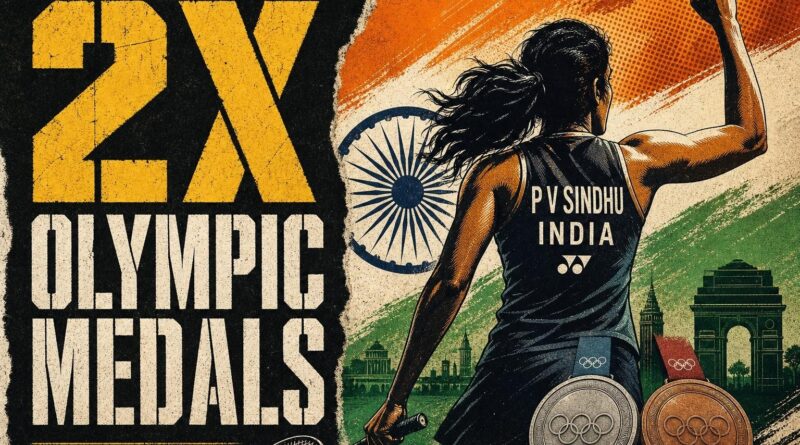
PV Sindhu Makes History in Indian Badminton
PV Sindhu Makes History in Indian Badminton
This week, PV Sindhu walked onto a court in Japan and did something no Indian badminton player had ever done before. She didn’t just win a tournament. She beat the world No. 3 on her home turf, ended a 19-month wait, and wrote her name into the history books — all in straight games.
The Japan Open title had never belonged to an Indian. Until now.
The Rivalry Nobody Could Predict
Akane Yamaguchi is not the kind of player you beat easily. She is Japan’s biggest badminton star — fast, relentless, and playing in front of her own crowd. When Sindhu stepped onto that court for the final, she was facing someone who had the crowd, the ranking, and the pressure of expectation all on her side.
But Sindhu had something Yamaguchi didn’t: a head-to-head record that already tilted in her favour.
Their career rivalry stood at 29 meetings before this final. Sindhu led it 14-13 — not by much, but enough to carry a quiet psychological edge into the biggest match of the tournament. Two players who had spent years trading wins, studying each other, knowing every pattern the other one throws. When the 30th meeting arrived, in a tournament final, on Japanese soil, both of them knew exactly what was at stake.
Sindhu won. Straight games. The head-to-head now reads 15-14 in her favour.
Nineteen Months of Silence
Here is the part that makes this victory hit differently.
Sindhu had not won a BWF tour title in approximately 19 months before this. For a player of her stature — an Olympic medallist, one of the most decorated Indian athletes in history — that is a long time to go without a trophy. Fans had questions. Pundits had opinions. The kind of noise that builds around a champion who seems to be searching for something.
What the noise missed was the work happening underneath it. Sindhu wasn’t fading. She was rebuilding — sharpening the attacking badminton that made her dangerous in the first place. The Japan Open final was not a comeback story built on sentiment. It was a performance. Vintage attacking badminton, by multiple accounts. The kind of play that doesn’t happen by accident after 19 months of silence — it happens because someone spent those months preparing for exactly this moment.
Nineteen months is a long drought. The way she ended it suggested the drought was never the whole story.
The History Behind the Win
No Indian had ever won the Japan Open women’s singles title before Sindhu claimed it this week — and she claimed it the hardest way possible, by beating the world No. 3 in the final, in Japan, in straight games.
Indian badminton has produced world-class players for decades, with millions of fans and a pipeline of young talent that keeps getting stronger. And yet this particular title had never gone to an Indian woman. Sindhu didn’t change that with a lucky draw or a weakened field. She changed it with a performance.
Prime Minister Narendra Modi called it a historic feat for Indian badminton and congratulated her publicly. Sindhu’s reply — “Your wishes mean the world to me” — was brief, but it said something about where her head had been during those 19 quiet months. She wasn’t chasing validation. She was chasing exactly this: a result so clear it needed no grand speech to explain it.
What This Means Right Now
Indian badminton is in an interesting place in 2026. The sport has never had more visibility, more investment, or more young players pushing through the ranks. But at the top of the game, it is still Sindhu carrying the flag — and performances like the Japan Open win are a reminder of why that is.
She is not just a name from a golden era. She is an active, competing, title-winning force. Beating Yamaguchi — the world No. 3 — in their 30th career meeting, with the head-to-head on the line, in a tournament final, is not a veteran holding on. It is a player operating at the highest level of the sport.
The 19-month drought is over. The history has been made. And for Indian badminton fans, the more interesting question now is: what does Sindhu do next?
Final Thought
The Japan Open title matters for a specific reason that goes beyond the trophy. Sindhu’s 15-14 lead over Yamaguchi — built across 30 meetings — shows that this win wasn’t a fluke or a one-day performance. It was the latest chapter in one of badminton’s most competitive rivalries, settled on the biggest stage available. The first Indian to win this title didn’t do it by avoiding the hardest opponent. She did it by beating her, again, when it counted most.
Frequently Asked Questions
What history did PV Sindhu make at the Japan Open?
PV Sindhu became the first Indian badminton player to win the Japan Open title, defeating world No. 3 Akane Yamaguchi in straight games on Japanese soil.
How long had PV Sindhu gone without a BWF tour title before the Japan Open?
PV Sindhu had not won a BWF tour title for approximately 19 months before her historic Japan Open victory, during which she was focused on rebuilding her attacking game.
What is PV Sindhu’s head-to-head record against Akane Yamaguchi?
PV Sindhu leads her career rivalry against Akane Yamaguchi 15-14, after their 30th meeting in the Japan Open final, which Sindhu won in straight games.
Recommended Reading
Explore these hand-picked resources to dive deeper into this topic:
As an Amazon Associate, we earn from qualifying purchases. This helps support Fact Storm Hub at no extra cost to you.
Sources
- https://www.youtube.com/watch?v=ZOZaljIVg9o
- https://www.youtube.com/watch?v=XB4aBXsuwmc
- https://www.hotstar.com/in/sports/badminton/pv-sindhu-vs-akane-yamaguchi-final-highlights/1540074162/video/highlights/watch
- https://indianexpress.com/article/sports/badminton/pv-sindhu-wins-maiden-japan-open-title-yamaguchi-title-drought-end-10793302/lite/
- https://www.newindianexpress.com/sport/other/2026/Jul/19/vintage-sindhu-stuns-yamaguchi-to-win-maiden-japan-open-title-3
🤖 AI Content Disclosure
This article was created using AI-assisted research and writing tools, then reviewed for quality and accuracy. Facts are sourced from publicly available web research, but readers should verify critical information from primary sources.
Published for educational and entertainment purposes. Last reviewed: July 2026