
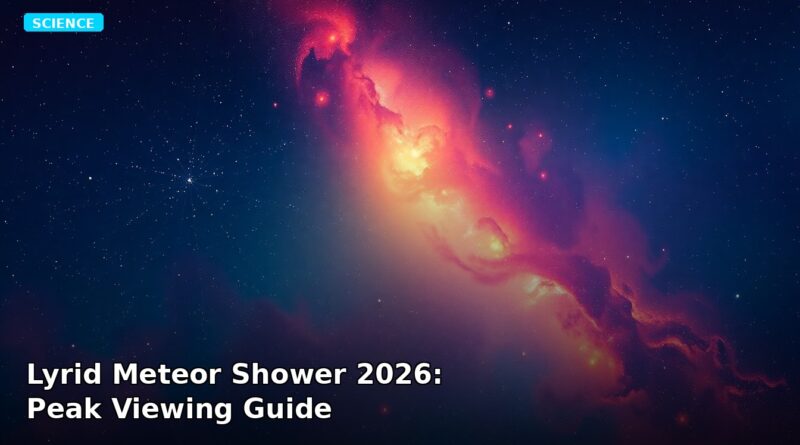
Lyrid Meteor Shower 2026: Peak Viewing Guide
Lyrid Meteor Shower 2026: Peak Viewing Guide
Right now, tonight, Earth is flying through a trail of rubble left by a comet that last visited our solar system before the Roman Empire existed. And the best moment to watch it burn across the sky is less than 24 hours away.
The Lyrid meteor shower peaks on the night of April 21–22, 2026 — that’s tonight and into tomorrow morning. If you’re reading this after midnight, you’re already in the window.
What You’re Actually Watching
Most people look up at a meteor shower and think “shooting stars.” That framing undersells what’s actually happening by about a thousand miles.
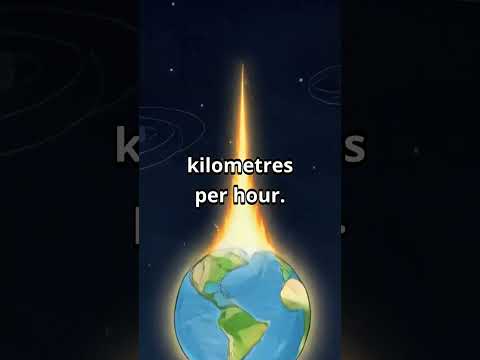
What you’re watching is ancient comet debris — tiny fragments of rock and dust, some no bigger than a grain of sand — slamming into Earth’s atmosphere at tens of thousands of kilometers per hour. The streak of light isn’t the rock glowing. It’s the air in front of it being compressed so violently that it superheats and ignites. The meteor burns up. The light is the death of something that has traveled through space for longer than human civilization has existed.
The Lyrids are named after the constellation Lyra — specifically, the radiant point in the sky from which the meteors appear to originate. When you trace any Lyrid streak backward across the sky, the line points toward Lyra. That’s not coincidence. It’s geometry. Every fragment is traveling on the same ancient orbital path, and Earth cuts through that path every April without fail.
The active window this year runs from April 14 through April 30, 2026. But the peak — the night when Earth passes through the densest part of the debris field — is tonight, April 21 into the early hours of April 22.
The Comet Nobody Talks About
Here’s the detail that reframes this entire event: the Lyrids are one of the oldest recorded meteor showers in human history. Ancient observers documented them long before anyone understood what comets were, long before anyone knew why streaks of fire appeared in the same patch of sky every spring.
The debris trail comes from a comet — and the Lyrids have been reliably returning to Earth’s sky for thousands of years. That consistency is the remarkable part. While most news cycles focus on the “when and where” of the shower, the deeper story is that this event has been happening like clockwork, year after year, for longer than any civilization currently on Earth has existed.
This year, Arizona stargazers are being told to look out for not just the Lyrids but also a rare comet making a concurrent appearance in April skies. Two ancient space visitors in the same viewing window. That combination is genuinely unusual — most years, the Lyrids arrive alone.
The comet connection also explains why meteor showers don’t last forever. Each time a comet swings through the inner solar system, the sun’s heat causes it to shed material. That material spreads along the comet’s orbital path. When Earth crosses that path, we get a meteor shower. When the comet eventually breaks apart or drifts off course, the shower weakens. The Lyrids have survived long enough to be remarkable.
The Exact Window — And Why Timing Is Everything
Three hours. That’s roughly the difference between a memorable night and a frustrating one.
The research is specific: the optimal viewing window for the 2026 Lyrid peak is after midnight and before dawn on the morning of April 22. Not at sunset. Not at 9 p.m. After midnight.
The reason comes down to Earth’s rotation. As the planet spins, the side facing the direction of Earth’s orbital motion — the “leading edge” — sweeps up more debris. After midnight, your location on Earth rotates into that forward-facing position. The meteors hit the atmosphere at a steeper angle, they’re more frequent, and they’re brighter. Before midnight, you’re on the trailing side, looking at the sky that Earth is moving away from.
Step outside after 10 p.m. local time on April 21 and face east — that’s where the radiant point in Lyra rises. But don’t expect your eyes to immediately pick up faint streaks. The research is clear on this: it takes at least 15 to 30 minutes for human eyes to fully dark-adapt. That means no phone screens, no streetlights, no glancing back at the car headlights. Thirty minutes of genuine darkness before your night vision kicks in.
The other variable is light pollution. To see the Lyrids properly, you need to get away from city lights and tall buildings. This is the part most people skip — and it’s why most people are underwhelmed by meteor showers. A shower that produces dozens of meteors per hour in a dark sky might produce three or four visible streaks from a suburban backyard. Distance from the city is not optional. It’s the entire game.
Why This Particular Night Matters More Than You Think
April 21, 2026 sits inside a viewing window that runs through April 30 — but the peak is tonight. After tonight, the density of the debris field drops off. The shower continues, technically, but the rate of meteors per hour falls significantly. Watching on April 25 is like arriving at a concert after the headliner has already played.
There’s also something worth saying about what this event represents beyond the spectacle. Every April, without any human planning or intervention, Earth passes through this ancient debris trail. The comet that created it doesn’t know we’re here. The fragments burning up in the atmosphere tonight have been drifting through space on their orbital path for longer than recorded history. The fact that we can predict exactly when this will happen — down to the night, down to the hour — is itself a product of centuries of observation and physics.
NASA and space agencies track meteor showers partly for spectacle and partly for science. The composition of meteor debris tells researchers about the early solar system — what materials were present, how they combined, what conditions existed before any planet formed. Each streak of light above Arizona tonight is also a data point in an ongoing investigation into where everything came from.
Final Thought
The Lyrids are not the flashiest meteor shower on the calendar. They don’t produce the raw numbers of the Perseids in August or the Geminids in December. But they arrive every April 21–22 with a consistency that has outlasted empires, and this year they share the sky with a rare comet that may not return for generations.
The window closes. The peak is tonight. After midnight, facing east, thirty minutes for your eyes to adjust, as far from city lights as you can get — that’s the entire formula. The debris from a comet older than recorded civilization will do the rest.
Recommended Reading
Explore these hand-picked resources to dive deeper into this topic:
- Cosmos by Carl Sagan
- NightWatch: A Practical Guide to Viewing the Universe by Terence Dickinson
- Celestron 70mm Refractor Telescope
As an Amazon Associate, we earn from qualifying purchases. This helps support Fact Storm Hub at no extra cost to you.
Sources
- https://www.azcentral.com/story/entertainment/life/2026/04/16/lyrid-meteor-shower-2026-arizona/89250254007/
- https://www.space.com/stargazing/meteor-showers/the-lyrids-are-coming-how-i-watch-meteor-showers-from-the-middle-of-a-city
- https://www.spokesman.com/stories/2026/apr/13/the-lyrids-meteor-shower-will-soon-put-on-a-show-w/
- https://earthsky.org/astronomy-essentials/earthskys-meteor-shower-guide/
- https://www.pbs.org/newshour/science/how-to-spot-the-lyrid-meteor-shower-that-is-peaking-this-week
🤖 AI Content Disclosure
This article was created using AI-assisted research and writing tools, then reviewed for quality and accuracy. Facts are sourced from publicly available web research, but readers should verify critical information from primary sources.
Published for educational and entertainment purposes. Last reviewed: July 2026