
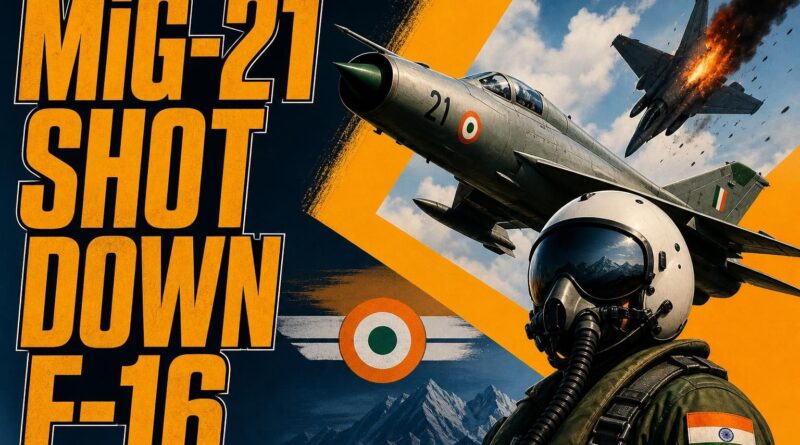
IAF Pilot Shot Down F-16 in MiG-21, Then Became Pilot
IAF Pilot Shot Down F-16 in MiG-21, Then Became Pilot
He flew one of the oldest jets in India’s fleet against one of the most advanced fighters in Pakistan’s arsenal. He won. Then he spent three days in enemy captivity without breaking. Then he went back to work, quietly, for years — until the day he retired and walked straight into a commercial cockpit.
This is the career of Group Captain Abhinandan Varthaman. And somehow, it keeps getting more remarkable.
The Aircraft Gap Nobody Wants to Talk About
The MiG-21 Bison is a Soviet-era jet — a machine that most air forces had retired entirely by the time 2019 arrived. It belongs to a different era of warfare.
The F-16 Fighting Falcon is the opposite. A fourth-generation multirole combat aircraft, the kind countries spend billions acquiring. Pakistan’s F-16s carry advanced radar, long-range missiles, and electronic warfare systems — hardware that represents some of the most capable kit in the region.
Abhinandan Varthaman flew the older jet into that engagement. He came out having shot the F-16 down.
Think of it this way: it is like a decades-old hatchback outrunning a modern sports car on a highway — except the stakes were not a race. They were life and death, at several hundred kilometres per hour, at altitude, over a disputed border.
The 2019 aerial engagement followed Indian airstrikes near Balakot. Pakistan responded with its own air operation. Abhinandan scrambled to intercept. His MiG-21 was shot down in the engagement — but not before he had already brought down the F-16.
Three Days in Pakistan
Abhinandan Varthaman ejected from his aircraft and landed in Pakistani-controlled territory. What followed was three days of captivity — three days that the entire country watched, waiting.
Footage of him emerged: visibly composed despite the circumstances. The image of him sipping tea became one of the defining visuals of that period, watched by millions across India and beyond. He gave away nothing he wasn’t supposed to. He stayed calm in a situation designed to break composure.
Pakistan repatriated him after three days, describing the move as a peace gesture. He crossed back into India. The scenes on the Indian side were unlike anything seen at that crossing in years.
For his actions during the aerial engagement — shooting down the F-16, and conducting himself with discipline during captivity — Abhinandan Varthaman was awarded the Vir Chakra. That is India’s third-highest wartime gallantry medal. It is not handed out for participation. It is awarded for acts of courage under fire, in the face of the enemy.
22 Years. One Name Everyone Remembers.
Born on 21 June 1983 in Tamil Nadu, Abhinandan Varthaman spent his entire adult life in the Indian Air Force. Twenty-two years of service — a career built on discipline, precision, and thousands of hours in the cockpit, most of them completely invisible to the public.
Fighter pilots train for years before they ever get near a combat aircraft. The MiG-21 Bison, despite its age, is not a forgiving machine. It has a demanding handling profile and a history of accidents that earned it a grim reputation in aviation circles. Flying it well requires skill. Flying it into an engagement against an F-16 and coming out having made a kill requires something beyond skill.
The 2019 incident made Abhinandan Varthaman a household name overnight. His face appeared on murals, merchandise, and front pages across India. He became, for many, the clearest symbol of what the IAF stood for — not equipment superiority, but the person behind the controls.
After the spotlight faded, he returned to his role. He kept flying. He kept serving. No public statements, no media appearances, no capitalising on the moment. Just the job.
Now He Flies Passengers Over Goa
Following his retirement from the IAF, Abhinandan Varthaman joined FLY91 — a regional airline based in Goa — as a commercial pilot.
Military pilots, especially fighter pilots, carry thousands of hours of flight experience and a standard of training that commercial aviation values highly. The skills transfer. The discipline transfers. What changes is the mission.
Instead of intercepting aircraft over a disputed border, he is now responsible for getting passengers safely from one Indian city to another. It is quieter work. It is also, in its own way, essential work — FLY91 operates regional routes, connecting smaller cities and communities that larger airlines routinely overlook.
The man who once scrambled to intercept an F-16 will now be the reason an ordinary traveller makes it home on time. The cockpit is the same. Only the mission has changed.
Final Thought
The Vir Chakra citation will follow Abhinandan Varthaman for the rest of his life — and it should. But the detail that actually tells you who he is sits inside the 2019 engagement itself: he flew a MiG-21 Bison, a jet decades older than his opponent’s F-16, and he won. Then he spent three days in captivity and said nothing he wasn’t supposed to say. Then he went back to work for years without making noise about any of it.
Now he’s a commercial pilot at FLY91, flying passengers over Indian skies. Twenty-two years of service. One aerial kill that should not have been possible. And a quiet, deliberate decision to keep flying long after the country stopped watching.
That is the full picture. And it is worth knowing.
Frequently Asked Questions
Did Abhinandan Varthaman really shoot down an F-16 with a MiG-21?
Yes, during the 2019 aerial engagement following Indian airstrikes near Balakot, Abhinandan Varthaman shot down a Pakistani F-16 while flying a Soviet-era MiG-21 Bison, despite the massive technological gap between the two aircraft.
How long was Abhinandan Varthaman held captive in Pakistan?
Abhinandan Varthaman was held in Pakistani captivity for three days after ejecting from his MiG-21, during which he remained visibly composed, with footage of him calmly sipping tea becoming a defining image of that period.
What did Abhinandan Varthaman do after retiring from the Indian Air Force?
After retiring from the Indian Air Force as a Group Captain, Abhinandan Varthaman transitioned to a commercial pilot career, continuing to fly in a civilian capacity.
Recommended Reading
Explore these hand-picked resources to dive deeper into this topic:
- Fly Boy by James Bradley
- The Kargil War by Maroof Raza
- MiG-21 Documentary Series (aviation history collection)
As an Amazon Associate, we earn from qualifying purchases. This helps support Fact Storm Hub at no extra cost to you.
Sources
- https://en.wikipedia.org/wiki/Abhinandan_Varthaman
- https://www.ndtv.com/india-news/pilot-abhinandan-varthaman-who-shot-down-pak-jet-retires-from-iaf-and-joins-goa-airline-report-11995014
- https://www.ndtv.com/india-news/pilot-abhinandan-varthaman-who-shot-down-pak-jet-retires-from-iaf-and-joins-goa-airline-report-11995014
- https://m.economictimes.com/news/new-updates/abhinandan-varthaman-who-shot-down-pakistani-f-16-quits-iaf-to-join-fly91-heres-how-fighter-pilots-become-commercial-pilots/articleshow/133726515.cms
- https://www.tribuneindia.com/news/defence/iaf-group-captain-varthaman-who-ejected-inside-pakistan-during-balakot-airstrike-retires/

🤖 AI Content Disclosure
This article was created using AI-assisted research and writing tools, then reviewed for quality and accuracy. Facts are sourced from publicly available web research, but readers should verify critical information from primary sources.
Published for educational and entertainment purposes. Last reviewed: September 2026