

BA295: The 28,000-Foot Plunge Explained
BA295: The 28,000-Foot Plunge Explained
This week, a British Airways flight bound for Chicago turned around over Ireland and landed back at Heathrow. Passengers had oxygen masks falling from the ceiling. The plane had plunged from 37,000 feet to roughly 9,000 feet in a matter of minutes. That’s a drop of 28,000 feet — the height of nearly three Mount Everests stacked on top of each other.
Most people saw the headline and moved on. But the story behind what those numbers actually mean — and what was happening inside that aircraft — is worth understanding.
One Hour In, Everything Changed
British Airways flight BA295 departed London Heathrow at 12:14pm on Monday, 5 October 2026. It was a routine scheduled service to Chicago’s O’Hare airport, operated by a Boeing 777-200ER — one of the most widely flown long-haul aircraft in the world.
The first hour was ordinary. The aircraft climbed steadily to its cruising altitude of 37,000 feet, the kind of height where the sky turns a deeper shade of blue and the curvature of the Earth becomes faintly visible through the windows. Passengers were likely settling in — ordering drinks, opening laptops, pulling out headphones.
Then something went wrong.
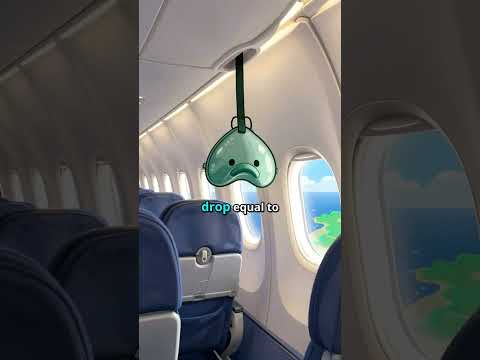
The aircraft was flying over Ireland when the emergency began. Within minutes, the plane was in a rapid descent. The oxygen masks — those small yellow cups that flight attendants demonstrate at the start of every flight and that most passengers never expect to actually use — dropped from the ceiling panels above every seat.
By the time the descent stabilised, BA295 had fallen from 37,000 feet to approximately 9,000 feet. Twenty-eight thousand feet. Gone.
What the 7700 Code Actually Means
While passengers were reaching for their oxygen masks, the pilots were already communicating with air traffic control in the only language that matters in those moments: numbers.
They issued a squawk 7700.
If you’ve never heard that term, here’s what it means. Aircraft constantly broadcast a four-digit code called a transponder squawk — it tells air traffic controllers on the ground exactly who they’re talking to on their radar screens. Most flights use routine codes. But 7700 is different. It’s the universal general emergency code, recognised by every air traffic control facility in the world, in every country, regardless of language. The moment a controller sees 7700 appear on their screen, the aircraft broadcasting it becomes the priority — everything else moves out of the way.
Squawking 7700 is not a small decision. Pilots are trained to use it when the situation demands immediate, coordinated help from the ground. The code clears airspace ahead of the aircraft, triggers emergency services at the destination airport, and puts every controller in the region on alert. Crash tenders move to standby positions. Runways are cleared. The entire ground operation reorganises itself around one aircraft.
BA295’s crew issued that code over Ireland. Then they turned the aircraft around and pointed it back toward London.
Why 9,000 Feet Is the Number That Matters
The descent from 37,000 feet to 9,000 feet sounds dramatic — and it is — but that specific altitude is not random.
At 37,000 feet, the air outside the aircraft is brutally thin. The human body cannot survive in it without help. Commercial aircraft maintain a pressurised cabin, which means the air inside is kept at a comfortable, breathable pressure even when the air outside is almost nothing. If that pressurisation fails — for any reason — the oxygen available to passengers and crew drops rapidly. Unconsciousness can follow within seconds at extreme altitude.
The oxygen masks that fell from the ceiling on BA295 are designed for exactly this scenario. They provide a short supply of oxygen — enough to keep passengers conscious while the pilots do the one thing that solves the problem: get the aircraft down to an altitude where the air outside is breathable on its own.
That altitude is generally considered to be around 10,000 feet or below. At 9,000 feet, the air is thin compared to sea level, but a person can breathe it. The emergency descent — as alarming as 28,000 feet of altitude loss sounds — was the crew doing their job precisely as trained. The aircraft then turned back and landed safely at London Heathrow.
What the Boeing 777-200ER Is Built For
The aircraft at the centre of this incident, the Boeing 777-200ER, is worth understanding in its own right.
The 777 family is the backbone of long-haul aviation. The “ER” designation stands for Extended Range — these aircraft are built specifically for routes like London to Chicago, where the ocean crossing demands both fuel capacity and mechanical reliability over many hours of flight with no airport nearby.
The 777 is a twin-engine aircraft, which means every critical system is designed with redundancy layered upon redundancy. Two engines. Backup hydraulic systems. Multiple independent electrical buses. Multiple communication systems. The engineering philosophy behind aircraft like this is explicit: no single failure should be able to cascade into catastrophe, because on a transatlantic route, there is no margin for a cascade of problems. If one system fails, another takes over. If that one degrades, a third is waiting.
This redundancy philosophy extends to crew training. Emergency descents, 7700 squawk procedures, return-to-base decisions — these are not improvised responses. They are drilled scenarios, practised in simulators until the actions become instinctive. When something goes wrong at 37,000 feet over the Irish coast, the crew is not figuring it out. They are executing.
When something does go wrong on a 777 — and in aviation, incidents do happen — the aircraft is built to give its crew options. The emergency descent over Ireland, the 7700 squawk, the turn back to Heathrow: all of that happened because the systems and the training worked as designed. The aircraft landed. Everyone was safe.
The Outcome That Matters
BA295 landed safely back at London Heathrow. Every passenger walked off that aircraft.
That outcome is not luck. It is the product of decades of accumulated aviation safety engineering, international protocols that function identically whether a flight is over Ireland or the Pacific, and crews trained to make the right call under pressure — including the call to turn around.
The 7700 squawk. The emergency descent to 9,000 feet. The oxygen masks doing their job for the minutes they needed to. Each of those things worked. In aviation, when everything works in sequence during an emergency, the result is a story that ends with passengers filing off a plane at the gate they departed from, shaken but unharmed.
That is the story of BA295. And it is, in the truest sense, a good one.
Frequently Asked Questions
What happened on British Airways flight BA295?
British Airways flight BA295 departed London Heathrow on 5 October 2026 bound for Chicago but turned around over Ireland after the aircraft rapidly descended from 37,000 feet to approximately 9,000 feet, causing oxygen masks to deploy throughout the cabin.
How far did British Airways flight BA295 drop?
Flight BA295 dropped approximately 28,000 feet in a matter of minutes, falling from its cruising altitude of 37,000 feet down to roughly 9,000 feet — a descent equivalent to nearly three Mount Everests stacked on top of each other.
What does squawk 7700 mean on a flight?
Squawk 7700 is an emergency code transmitted by pilots to air traffic control to immediately signal a general emergency onboard. The pilots of BA295 issued this code while passengers were reaching for their oxygen masks during the rapid descent.
Recommended Reading
Explore these hand-picked resources to dive deeper into this topic:
- Mayday: Disaster and Rescue at Sea by Michael J. Moore
- The Checklist Manifesto by Atul Gawande
- Smithsonian Channel Aviation Documentaries (streaming collection)
As an Amazon Associate, we earn from qualifying purchases. This helps support Fact Storm Hub at no extra cost to you.
Sources
- https://www.ndtv.com/world-news/flydubai-british-airways-ba295-emergency-london-to-chicago-ireland-12141824
- https://www.youtube.com/watch?v=a30_xbs8fmk
- https://www.theguardian.com/business/2026/oct/05/london-to-chicago-ba-flight-declares-emergency-after-dropping-28000-feet
- https://www.firstpost.com/explainers/british-airways-london-chicago-flight-ba295-emergency-sudden-plunge-14050651.html
- https://www.youtube.com/watch?v=AOAqRvOVbOo
🤖 AI Content Disclosure
This article was created using AI-assisted research and writing tools, then reviewed for quality and accuracy. Facts are sourced from publicly available web research, but readers should verify critical information from primary sources.
Published for educational and entertainment purposes. Last reviewed: October 2026