
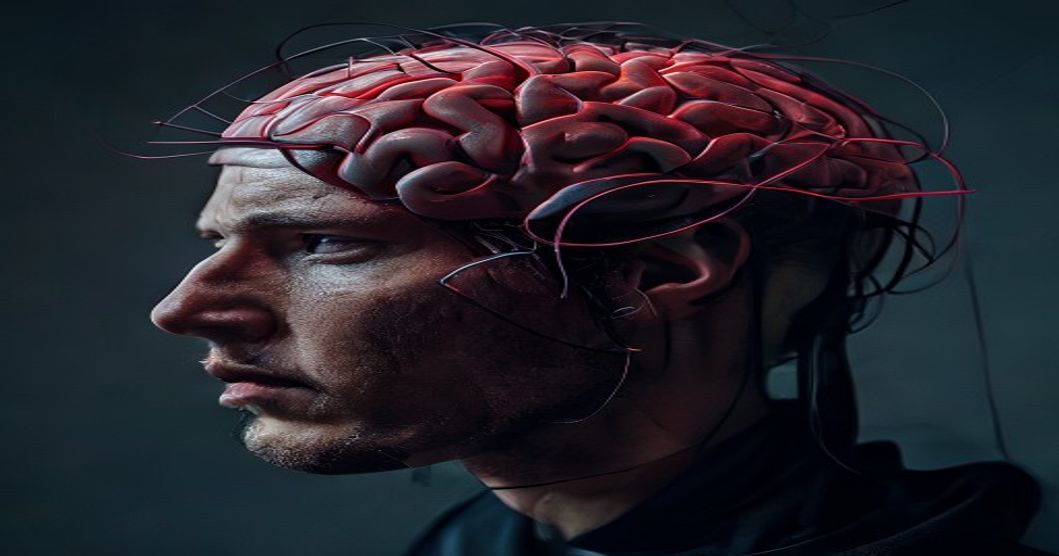
4 Things Noland Arbaugh Did With Neuralink’s Brain Chip
4 Things Noland Arbaugh Did With Neuralink’s Brain Chip
For eight agonizing years, Noland Arbaugh’s world was framed by the limits of quadriplegia. A diving accident had stolen his movement, but not his mind. Then, on January 29, 2024, a message from Elon Musk’s company, Neuralink, went viral across the globe, announcing a breakthrough that sounded like pure science fiction: the first human had received their brain-computer interface. That human was Noland Arbaugh, and what he did next was nothing short of unbelievable.
1. He Moved a Cursor With a Ghost Limb
Before the Neuralink implant, the world of assistive technology for someone like Noland was often a frustrating compromise. Head-trackers, mouth-sticks, and voice commands were the best tools available, but they were often slow, cumbersome, and a constant reminder of physical limitation. The very idea of controlling a computer with pure thought was a distant dream, something reserved for Hollywood blockbusters. The common assumption was that even if it were possible, the connection would be laggy, imprecise, and mentally exhausting—a technological party trick, not a practical tool.
Then came the surgery. A robot, with sub-millimeter precision, threaded 1,024 microscopic electrodes into the part of Noland’s brain that controls movement intention. The device, called the “Link,” is cosmetically invisible, a silent passenger beneath the skin. When it was first activated, the goal was simple: move a cursor on a screen. Noland didn’t have to strain or perform complex mental gymnastics. He just had to imagine moving his hand. And then, it happened. The cursor twitched. It moved. For the first time in eight years, a direct command from his brain traveled to the outside world, bypassing his severed spinal cord entirely. This wasn’t just a small victory; it was a world record for human-computer interaction, a moment that proved the fundamental connection was not only possible but shockingly intuitive. The ghost limb in his mind now had a presence in the digital world.
2. He Played a Marathon 8-Hour Gaming Session
Once the cursor was conquered, the next question was one of endurance and complexity. Could this new connection handle more than just simple point-and-click tasks? Skeptics imagined the mental fatigue would be immense, that using the Link would be like sprinting a mental marathon just to write an email. A few minutes of use, they thought, would be the absolute limit. The initial tests were simple games, like online chess, which Noland quickly mastered. But then he pushed the boundary—hard.
He loaded up the complex strategy game Civilization VI, a game that requires hours of sustained focus, intricate planning, and rapid decision-making. And he didn’t just play for a few minutes. Noland played for eight hours straight, his session only ending when the Link’s battery needed to be recharged. This was an amazing feat that shattered all expectations about the technology’s limitations. An eight-hour gaming session can be draining for an able-bodied person using a mouse and keyboard. Noland did it using only his mind. This wasn’t just a test of the technology; it was a reclamation of a life. He wasn’t just a patient in a trial; he was a gamer, pulling an all-nighter, completely absorbed in a world he could once again command.
3. He Became a “Telekinetic” Warlock in World of Warcraft
Playing a turn-based strategy game is one thing. Entering the fast-paced, chaotic, and competitive world of an online multiplayer game like World of Warcraft is another challenge entirely. This is a world that demands fluid movement, split-second reactions, and simultaneous control of multiple abilities. It’s a place where even a fraction of a second of lag can mean the difference between victory and defeat. Surely, this would be where the brain-computer interface would show its limits. The sheer speed and complexity seemed insurmountable for a technology in its infancy.
But Noland Arbaugh didn’t just log in; he thrived. He controlled his character, a warlock, with a grace and precision that felt, in his own words, like using “the Force.” He described the experience as becoming telekinetic, where the gap between his intention and the character’s action on screen simply disappeared. The news of a paralyzed man raiding dungeons in World of Warcraft using only his thoughts went viral, becoming a potent symbol of the technology’s power. It was the ultimate demonstration of freedom. For the first time since his accident, Noland wasn’t just interacting with a screen; he was inhabiting a space, moving freely in a digital body, and competing on a level playing field with players from all over the world. It was a shocking and deeply human application of this groundbreaking science.
4. He Delivered a Raw, Unfiltered Public Testimony
In the high-stakes world of tech, especially with a figure as polarizing as Elon Musk, public announcements are typically polished, corporate, and carefully scripted. The expectation for Neuralink’s first patient would be a sterile, pre-approved statement delivered in a controlled environment. The world was watching, and many were waiting for the catch, the fine print, the inevitable PR spin. They expected a flawless success story, which in itself would have been suspect.
Instead, in a livestream in February 2024, Noland Arbaugh gave something far more powerful: the unvarnished truth. He was candid and emotional, speaking directly to the camera with a sense of wonder that was impossible to fake. “It’s not perfect,” he admitted, mentioning that the system had its challenges. “But it has already changed my life.” This admission of imperfection made his endorsement unbelievably authentic. He spoke not as a test subject, but as a person whose world had been cracked open. He talked about the simple joy of staying up late to play games, of reconnecting with a world he thought he had lost forever. This wasn’t a corporate press release. It was a man sharing the story of his own personal miracle, and his raw honesty did more to validate the technology than any polished marketing campaign ever could.
Final Thought
On January 29, 2024, a surgical robot placed a chip the size of a coin into the brain of Noland Arbaugh. In the months that followed, he didn’t just move a cursor or play a game; he kicked down the door to a future we’ve only read about in science fiction. His journey from paralysis to “telekinetic” gamer is more than just an amazing story—it’s the first chapter in a new history of human potential. The 1,024 electrodes in his brain are not just reading thoughts; they are writing the prologue to an era where the boundaries between mind and machine begin to dissolve. We have just witnessed the first step, and the world will never be the same.
Sources
- https://neuralink.com/
- https://www.youtube.com/watch?v=YvMjKM37i3Q
- https://www.theguardian.com/science/2025/feb/08/elon-musk-chip-paralysed-man-noland-arbaugh-chip-brain-neuralink
- https://www.npr.org/2024/01/30/1227850900/elon-musk-neuralink-implant-clinical-trial
- https://www.captechu.edu/blog/neuralinks-brain-chip-how-it-works-and-what-it-means
Watch the Video
Recommended Reading
Explore these hand-picked resources to dive deeper into this topic:
- The Future of Humanity by Michio Kaku
- Elon Musk by Walter Isaacson
- Neuralink Brain Interface Documentary (educational video series)
As an Amazon Associate, we earn from qualifying purchases. This helps support Fact Storm Hub at no extra cost to you.
Share this story
🤖 AI Content Disclosure
This article was created using AI-assisted research and writing tools, then reviewed for quality and accuracy. Facts are sourced from publicly available web research, but readers should verify critical information from primary sources.
Published for educational and entertainment purposes. Last reviewed: April 2026