

What 105 TMC of Water at Koyna Dam Really Means
What 105 TMC of Water at Koyna Dam Really Means
In the middle of Maharashtra’s Western Ghats, there’s a dam sitting quietly above a lake that stretches for 50 kilometres. It doesn’t make headlines. It doesn’t trend on social media. But right now, as you read this, it is powering nearly 2,000 megawatts of electricity — enough to light up millions of homes across Maharashtra — using nothing but falling water and 18 spinning turbines.
The Koyna Dam is one of those things that’s so large, so fundamental to daily life, that most people simply stop seeing it. This is the story of why they shouldn’t.
A River That Starts at a Hill Station
Mahabaleshwar is known for strawberries and cool air. What most visitors don’t think about is where the water goes after it rains.
The Koyna River begins its journey in the Sahyadri ranges near Mahabaleshwar and flows down through the Western Ghats — one of the world’s most biodiverse mountain chains. The river doesn’t travel quietly. It cuts through dense forest, drops sharply in elevation, and eventually reaches a narrow valley in Satara district, about midway between the coastal town of Chiplun and the inland city of Karad.
That valley is where engineers in the 1950s saw something most people would have missed: a natural basin perfectly shaped to hold an enormous amount of water.
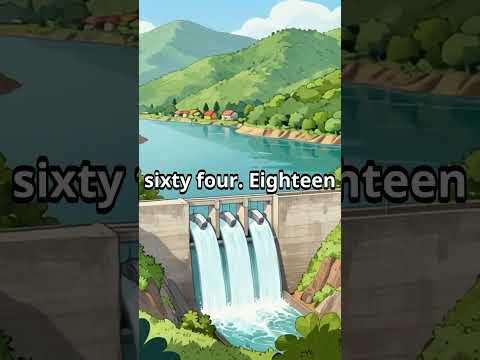
Construction on the Koyna Dam began in 1956. Eight years later, in 1964, the dam was complete. What they built was a rubble-concrete dam — a structure made by embedding large stones in concrete, a technique chosen for its strength against the pressure of the water it would hold back. The dam stands 103.2 metres tall and stretches 807.2 metres from one bank to the other. Six spillway gates control what flows out.
The valley behind it slowly filled. The result was Shivasagar Lake.
The Lake That Swallowed 50 Kilometres
Shivasagar Lake is the reservoir created by the dam, and its scale takes a moment to absorb.
It runs approximately 50 kilometres in length. Its surface area covers 891.78 square kilometres. And its total water storage capacity is 2,981,000,000 cubic metres — or 105.27 TMC (thousand million cubic feet), to use the unit engineers in Maharashtra actually work with.
To put 105 TMC into plain terms: one TMC of water is enough to meet the daily drinking water needs of a city for an extended period. Koyna holds 105 of those units. It is one of the largest reservoirs in Maharashtra, and it sits inside the Western Ghats — a region that receives some of the heaviest monsoon rainfall in India, which is exactly why this location was chosen.
The lake didn’t just create a water source. It created an ecosystem. The forests surrounding Shivasagar Lake fall within the Koyna Wildlife Sanctuary, one of Maharashtra’s most significant protected areas. The sanctuary is part of the larger Western Ghats landscape that UNESCO has recognised as a World Heritage Site — a region of extraordinary biological richness, home to species found nowhere else on Earth. The dam, in an unplanned way, helped preserve a buffer of wilderness around the reservoir simply because the land around it couldn’t be developed.
18 Turbines and the Electricity Nobody Thinks About
Here’s the part that surprises most people.
Koyna Dam is not primarily a drinking water project or an irrigation project, though it supports both. Its main purpose is power generation. The Koyna Hydroelectric Project has a total installed capacity of 1,960 megawatts — making it one of the largest hydroelectric facilities in India.
The way it works is straightforward in principle, extraordinary in scale. Water from Shivasagar Lake is directed through tunnels bored into the rock of the Western Ghats. That water drops sharply in elevation as it moves from the reservoir on the eastern side of the Ghats toward the Konkan coast on the western side. The drop creates pressure. The pressure spins turbines. The turbines generate electricity.
There are 18 Francis turbines in total, spread across four stages of the project plus a foot powerhouse at the base. A Francis turbine is a type of water turbine designed to handle large volumes of water at medium to high pressure — the kind of conditions that a dam with 105 TMC of stored water creates naturally. The entire project is operated by the Maharashtra State Electricity Board, under the ownership of the Government of Maharashtra.
1,960 megawatts. That number is worth sitting with. A single large coal power plant typically generates somewhere between 500 and 1,000 megawatts. Koyna, using only the force of falling water, generates nearly double that — with no fuel costs and no emissions in the generation process.
What the Western Ghats Actually Protect
The dam sits in a location that is ecologically remarkable independent of anything humans built there.
The Western Ghats — the Sahyadri ranges — run parallel to India’s western coastline for over 1,600 kilometres. They act as a barrier that catches the monsoon, forcing clouds to rise, cool, and release rainfall on the western slopes. This is why rivers like the Koyna exist at all, and why the region around Koyna Dam receives some of the most intense seasonal rainfall in the country.
That rainfall feeds forests that are among the most species-rich in Asia. The area around Shivasagar Lake and the Koyna Wildlife Sanctuary shelters leopards, giant squirrels, and hundreds of bird species. The rivers flowing out of these forests eventually reach the coast, feeding estuaries and marine ecosystems along the Konkan shoreline — a chain of ecological connections that begins with monsoon rain on a hillside and ends in the ocean.
The dam, built on the Koyna River, sits at the centre of this chain. It holds back water that would otherwise flow freely, which changes the river’s behaviour downstream. Managing that balance — how much water to release, when, and at what rate — is one of the quieter challenges of running a structure like this. The six spillway gates exist precisely for this: to control the release of water during monsoon season when the reservoir fills rapidly.
Final Thought
The Koyna Dam was completed in 1964 — over six decades ago — and it is still one of Maharashtra’s most important pieces of infrastructure. The 1,960 megawatts it generates flow into homes and factories across the state every day, invisible and unannounced. The 105.27 TMC it stores is what makes that generation possible through dry seasons when rain is months away.
But the more interesting thing about Koyna is what it reveals about the Western Ghats themselves: that a river rising near a hill station famous for strawberries, falling through one of the world’s most biodiverse mountain ranges, and dropping into the Konkan coast can quietly power a significant portion of a state of over 120 million people. The dam didn’t create that potential. The Sahyadri ranges did. Engineers in 1956 simply figured out where to stand.
Frequently Asked Questions
How much water does Koyna Dam hold?
Koyna Dam holds 105 TMC (Thousand Million Cubic feet) of water in its reservoir, Shivasagar Lake, which stretches 50 kilometres in length through Maharashtra’s Western Ghats.
How much electricity does Koyna Dam generate?
Koyna Dam generates nearly 2,000 megawatts of electricity using 18 turbines powered by falling water, providing enough power to light up millions of homes across Maharashtra.
When was Koyna Dam built and how tall is it?
Construction on Koyna Dam began in 1956 and was completed in 1964. The rubble-concrete dam stands 103.2 metres tall and stretches 807.2 metres wide, with six spillway gates controlling water flow.
Recommended Reading
Explore these hand-picked resources to dive deeper into this topic:
- A Brief History of Time by Stephen Hawking
- The Water Book by Alok Jha
- National Geographic Water Documentary Series (educational streaming content)
As an Amazon Associate, we earn from qualifying purchases. This helps support Fact Storm Hub at no extra cost to you.
Sources
- https://en.wikipedia.org/wiki/Koyna_Dam
- https://raceias.com/current-affairs/koyna-dam
- https://wrd.maharashtra.gov.in/Upload/PDF/ESMP%20Koyna.pdf
- https://www.incredibleindia.gov.in/en/maharashtra/satara/koyna-dam
- https://byjus.com/free-ias-prep/koyna-dam/
🤖 AI Content Disclosure
This article was created using AI-assisted research and writing tools, then reviewed for quality and accuracy. Facts are sourced from publicly available web research, but readers should verify critical information from primary sources.
Published for educational and entertainment purposes. Last reviewed: July 2026