
BrahMos Missile: India’s Game-Changing Defense Tech
BrahMos Missile: India’s Game-Changing Defense Tech
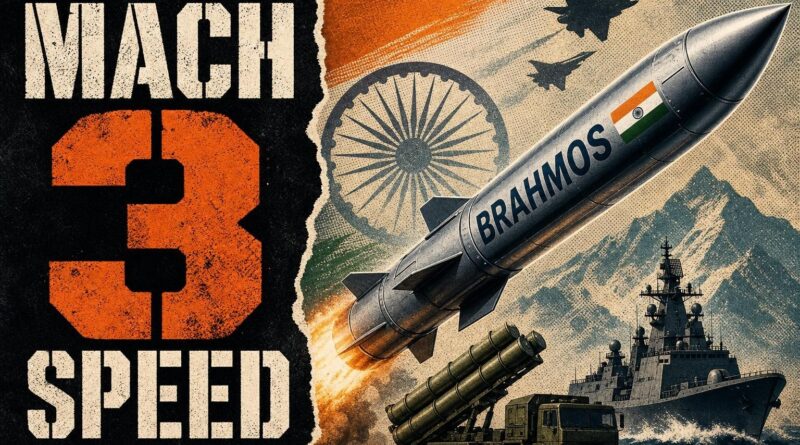
A supersonic missile traveling at nearly three times the speed of sound has done something no diplomatic speech could: it’s turned India into a defense exporter that Southeast Asia’s most strategically pressured nations are lining up to buy from. Three countries. One region. One weapon. And the deals are accelerating.
The Missile That Nobody Expected India to Sell
For most of its life, BrahMos was India’s secret advantage — a weapon built to defend, not to export.
The missile is a joint venture between India’s Defence Research and Development Organisation (DRDO) and Russia’s NPO Mashinostroyeniya. It entered active service on 21 June 2007, and for years it sat in a category of its own: a supersonic cruise missile that travels at nearly three times the speed of sound, making it one of the fastest anti-ship and land-attack missiles on the planet. Most countries in the region had nothing that could compare.
The name itself is a blend — Brahmaputra river from India, Moskva river from Russia. Two nations, one weapon. And for a long time, that partnership meant the missile stayed within India’s own arsenal.
Then the Philippines changed everything.
The $375 Million Deal That Opened the Floodgates
In 2022, the Philippines became the first foreign country to buy the BrahMos missile system from India. The deal was worth $375 million — not a small commitment for a nation that had never purchased Indian defense hardware at this scale before.
That single transaction rewrote the story of what BrahMos could be. It wasn’t just a weapon for India’s military. It was a product. An export. A signal to the rest of the region that India was now in the business of selling world-class defense technology.
Also in 2022, something else happened that made the region sit up and take notice. On March 9, a BrahMos cruise missile misfired, traveled 124 km across the border into Pakistan, and crashed into a civilian building in Mian Channu city. The diplomatic fallout was immediate — and the incident made one thing undeniable: this was not a theoretical weapon. It crossed international borders when it wasn’t supposed to. It hit a building. It triggered a crisis between two nuclear-armed neighbors.
Paradoxically, that incident may have reinforced what buyers in Southeast Asia already suspected — BrahMos was real, operational, and consequential. A missile that can accidentally travel 124 km and land with precision in a foreign country is, by the same logic, exactly what you want pointed outward when your coastline is contested. The Philippines signed their deal the same year. The region was paying attention.
Southeast Asia Is Now Buying In
Fast forward to June 2026, and the BrahMos story has a new chapter.
At the Shangri-La Dialogue defense forum in Singapore, India’s defense secretary Rajesh Kumar Singh confirmed what had previously been unspoken: India has signed a deal to supply BrahMos missile systems to Vietnam. His exact words were careful but clear — the deal had “already been signed, probably not publicly announced, but it’s already been signed.”
That quiet acknowledgment was significant. Vietnam becomes the third country in Southeast Asia to purchase BrahMos, after the Philippines and Indonesia. The Indonesia deal, described as being in its “final stages” earlier in 2026, has since been finalized.
Three countries. One region. All buying the same Indian missile.
This isn’t coincidence. Southeast Asia sits at the intersection of some of the world’s most contested maritime territory — the South China Sea. Countries in the region have been looking for credible deterrents, and BrahMos, with its speed and precision, fits that need exactly. India isn’t just selling a missile. It’s selling a strategic position.
What This Means for India’s Defense Identity
Here’s the part that reframes the entire story.
For decades, India was one of the world’s largest importers of military hardware — a buyer, not a seller, dependent on foreign suppliers for the equipment its own forces needed. The BrahMos export deals represent a genuine reversal of that identity, and the numbers make it concrete. A $375 million sale to the Philippines. A finalized agreement with Indonesia. A signed — if quietly announced — deal with Vietnam, confirmed by name by India’s own defense secretary at one of Asia’s most prominent security forums.
These are not symbolic gestures or letters of intent. They are contracts, with money attached, in a region where maritime tensions are rising and every government with a coastline on the South China Sea is making hard decisions about deterrence. India’s defense industry spent decades building toward this moment. The DRDO-Russia joint venture that produced BrahMos was always designed to be world-class. What wasn’t certain, for a long time, was whether the world would buy it.
Now it is — and the buyers are not random. The Philippines, Indonesia, and Vietnam are each navigating their own complicated relationships with China’s expanding naval presence. Acquiring BrahMos is a statement as much as a procurement decision. And India is the country making that statement possible.
Final Thought
The BrahMos missile’s journey — from a 2007 service entry to a $375 million Philippines deal in 2022, to three confirmed Southeast Asian buyers by mid-2026 — is one of the clearest examples of India’s defense industry maturing in real time. Rajesh Kumar Singh’s public confirmation in Singapore wasn’t a diplomatic footnote. It was the moment India’s status as a defense exporter stopped being a projection and became a documented fact: three buyers, one region, one named defense secretary on record. The threshold has already been crossed. The only question left is how the region reshapes around it.
Frequently Asked Questions
What country was the first to buy the BrahMos missile from India?
The Philippines was the first foreign country to purchase the BrahMos missile system from India in 2022, signing a deal worth $375 million, which marked a major milestone in India’s defense export history.
How fast does the BrahMos missile travel?
The BrahMos missile travels at nearly three times the speed of sound, making it one of the fastest anti-ship and land-attack cruise missiles in the world.
Who makes the BrahMos missile?
BrahMos is a joint venture between India’s Defence Research and Development Organisation (DRDO) and Russia’s NPO Mashinostroyeniya. The name blends the Brahmaputra river from India and the Moskva river from Russia.
Recommended Reading
Explore these hand-picked resources to dive deeper into this topic:
- India’s Nuclear Bomb by Itty Abraham
- The Strategy of India’s Defense by Bharat Karnad
- National Geographic Documentary Series (geopolitical analysis)
As an Amazon Associate, we earn from qualifying purchases. This helps support Fact Storm Hub at no extra cost to you.
Sources
- https://thediplomat.com/2026/06/india-has-signed-brahmos-missile-deal-with-vietnam-indian-minister-says/
- https://en.wikipedia.org/wiki/BrahMos
- https://www.reuters.com/world/asia-pacific/india-says-signed-brahmos-missile-deal-with-vietnam-2026-05-30/
- https://www.brahmos.com/
- https://www.dw.com/en/india-news-brahmos-missile-deal-signed-with-vietnam/live-77361781
🤖 AI Content Disclosure
This article was created using AI-assisted research and writing tools, then reviewed for quality and accuracy. Facts are sourced from publicly available web research, but readers should verify critical information from primary sources.
Published for educational and entertainment purposes. Last reviewed: July 2026